




Marie Curie Career Integration Grant (FP7-PEOPLE-2011-CIG)
Summary
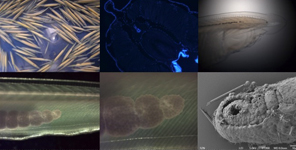
The main interest of the project is to study the Nitric Oxide Synthase (NOS) family evolution and its regulation during amphioxus development. In the framework of the project, setting-up an amphioxus facility at the SZN was a priority of national interest, representing the first Italian laboratory working with live amphioxus embryos on demand.
Since Furchgott, Ignarro and Murad won the Nobel Prize in Medicine or Physiology in 1998 for their breakthrough work on the role of nitric oxide (NO) as a multifunctional signaling molecule, many reports have shown the seemingly limitless range of body functions controlled by this compound. To manipulate the endogenous NO level for therapeutic benefits using NOS gene therapy is essential to understand the physiological and developmental functions of different NOS isoforms (nNOS, iNOS, eNOS). Due to their extensive conservation over evolutionary time, one would expect greater differences and structural changes in NOS genes than that we have observed (Andreakis 2011), reflecting the very ancient and essential nature of Nitric Oxide biological pathways.
Surprisingly, a single molecule, identical in all living animals, can fulfil a huge range of different functions. This suggests that differences in the regulation of NOS enzymes expression are key in explaining their functional diversification, functional novelties and degree of complexity.
What we do
We use as animal model system the cephalochordate amphioxus Branchiostoma lanceolatum, from the Gulf of Napoli (Italy) and from Banyuls-sur-Mer (France), with comparative and multidisciplinary approaches in the field of Evolutionary and Developmental Biology (Evo-Devo). The primary aim of this project is to perform a detailed study of the duplicated set of NOS genes during amphioxus development, trying to establish the basic primary NOS roles that are evolutionary conserved in chordates.
Partners
Stazione Zoologica Anton Dohrn, Napoli.
Research Area
Organismal Biology
Project Lifetime
August 2011 to July 2015
SZN Role
Coordinator
Principal Investigator
Funding Institution
European Commission, FP7 Call for Proposal: FP7-PEOPLE-2011-CIG
Grant no. 293871
Contribution to SZN
€100.000 (EU contribution)
Dedicated website
http://cordis.europa.eu/project/rcn/99685_en.html
Publications
Coppola U, Annona G, D’Aniello S* and Ristoratore F* (2015). Rab32/38 duplicated genes in chordate pigmentation: an evolutionary perspective BMC Evolutionary Biology, under review.
Annona G, Holland ND* and D’Aniello S* (2015). Evolution of the notochord. EvoDevo, in press.
Anishchenko E and D’Aniello S* (2015). Tunicate neurogenesis: the case of the SoxB2 missing CNE. Mathematical Models in Biology (Springer), in press.
Vassalli QA, Anishchenko E, Caputi L, Sordino P, D'Aniello S* and Locascio A* (2015). Regulatory elements retained during chordate evolution: Coming across tunicates. Genesis 53: 66-81.
Pascual-Anaya J, D’Aniello S, Kuratani S and Garcia-Fernàndez J (2013). Evolution of the Hox clusters in deuterostomes. BMC Developmental Biology 13: 26.
Meet the team
Salvatore D’Aniello, Ricercatore
Evgeniya Anishchenko, post-doc
Giovanni Annona, post-doc
Filomena Caccavale, PhD student

Non-Coding RNA Explosion: Novel Implications in Neurotrophin Biology
FIRB, MIUR-Cineca
Summary
The main focus of the project is the identification of non-coding RNAs (ncRNA) that regulate the expression of Neurotrophins (NT) and NT receptors (NTR). ncRNAs are a novel class of regulatory molecules that have been shown to be involved in almost all biological phenomena, including development and physiology of the nervous system.
Neurotrophins (NT) (BDNF, NGF and NT sensu stricto) are growth factors that control development, differentiation, synaptic plasticity and survival of several types of neuronal and glial cells in the embryonic and adult central nervous system and sensory organs. Based on the NT role in development and physiology of the nervous system, the present project aims at extending our knowledge on NTs molecular pathways, with emphasis on the their relationships with stress, aging and diseases.
The project will take advantage of as bioinformatic, molecular, genetic, biochemical and behavioural multidisciplinary approaches, with the aim to acquire new insights on the genetic regulatory networks and on the functions exerted by NT and NT receptors during the correct development and in conditions of thermal, social and nutritional stress. A distinctive feature of this research proposal is the use of three different model systems: cells, mouse and zebrafish.
In summary, the main purpose of the present project is to study the molecular, cellular and behavioural phenotype of NTs and NTRs, with emphasis on the relationships of these molecules with stress, ncRNAs and neurodegenerative diseases (NDs).
We are knocking out the BDNF, one of the most known neurotrophin together NGF, in zebrafish using the CRISPR/Cas9 thecnology to he improve our understanding of the role played by NTs during embryonic development and adult brain physiology, with particular attention to the biomedical impact in terms of diagnosis and treatment of neurodegenerative diseases.
What we do
We built a national network, in which the Stazione Zoologica Anton Dohrn of Napoli is the leader Institute, with the aim to merge multidisciplinary approaches and competences to reveal the importance of NT during vertebrate’s brain development.
Partners
Stazione Zoologica Anton Dohrn, Napoli (Unit 1); Dipartimento di Biologia e Biotecnologie "Charles Darwin", Università di Roma Sapienza (Unit 2); Dipartimento di Scienze Biologiche, Università di Napoli Federico II (Unit 3); Laboratorio di Bioinformatica, Università del Sannio (Unit 4).
Research Area
Organismal Biology
Project Lifetime
21 March 2013 to 20 March 2018
SZN Role
Coordinator of the whole project and Research Unit 1
Principal Investigator
Funding Institution
Futuro In Ricerca (FIRB), http://futuroinricerca.miur.it; Ministero dell’Istruzione, dell’Università e della Ricerca (MIUR), http://www.istruzione.it
Grant no. RBFR12QW4I
Contribution to SZN
€369.443 (MIUR contribution)
Publications
D’Agostino Y, Locascio A, Ristoratore F, Sordino P, Spagnuolo A, Borra M* and D’Aniello S* (2015). A rapid and cheap methodology for CRISPR/Cas9 zebrafish mutant screening. Molecular Biotechnology, in press.
Meet the team
Salvatore D’Aniello, Ricercatore
Ylenia D’Agostino, PhD student
Annamaria Locascio, Ricercatore
Filomena Ristoratore, Ricercatore
Paolo Sordino, Ricercatore
Antonietta Spagnuolo, primo Ricercatore
Summary
Il progetto DIsCO, Diatom life cycles, molecular controls and contribution to ecosystem dynamics
(Cicli vitali delle diatomee, controlli molecolari e contributo alla dinamica degli ecosistemi), si inquadra nella Marine Microbial Initiative promossa dalla Fondazione Gordon and Betty Moore.
In questo progetto altamente multidisciplinare si combinano approcci di laboratorio, studi a mare e approcci di modellistica per rispondere a diverse domande relative al controllo del ciclo vitale della diatomea Pseudo-nitzschia multistriata. In particolare ci si prefigge di i) comprendere i meccanismi endogeni che controllano il ciclo vitale della diatomea (quali sono i meccanismi di trasduzione del segnale? Quali sono le reti geniche coinvolte? Esiste un controllo epigenetico nelle transizioni tra le fasi del ciclo vitale?); ii) seguire le popolazioni naturali a mare mediante genomica di popolazione, in modo da comprendere la struttura genetica ma anche le dinamiche di evoluzione del genoma; iii) stimare quanto i processi di diversificazione genetica siano guidati da fattori ambientali, quanto la diversità genetica possa essere il risultato dell'interazione "neutra" tra divisione cellulare, mutazione genetica e ricombinazione, e quale sia l'effetto previsto delle perturbazioni ambientali sui tassi di divisione, mutazione e ricombinazione.
Il progetto prevede una componente importante di sviluppo ed applicazione di tecnologie innovative per il fitoplancton, tra cui il metodo dell’ATAC-seq per studi di epigenetica, la tecnologia CRISPR/Cas9 per lo studio della funzione genica e la trascrittomica su singola cellula per l’analisi dei diversi stadi sessuali.
La possibilità di formulare ipotesi in laboratorio e verificarle con dati ottenuti a mare, e viceversa, e la sintesi prevista con lo sviluppo di modelli conferiscono a questo progetto un connotato fortemente innovativo.
Obiettivi generali sono l’ampliamento delle conoscenze di base sulla componente microscopica degli ecosistemi marini, la comprensione delle dinamiche di evoluzione del genoma e delle conseguenze evolutive del processo di riproduzione sessuale in un organismo unicellulare marino.
What we do
La SZN è coinvolta in tutte le attività del progetto. Per affrontare le diverse domande, una parte dello studio è realizzata mediante sperimentazione di laboratorio con tecniche avanzate di genomica funzionale, una parte prevede campionamenti a mare nel sito della serie a lungo termine LTER-MareChiara nel Golfo di Napoli e in altri siti del Mediterraneo, e una terza parte prevede l’applicazione di approcci di modellistica. Metodi di sequenziamento di ultima generazione sono usati ampiamente per aspetti diversi del progetto, e gran parte dei dati generati prevede l’ausilio di metodi di bioinformatica per l’analisi.
Partners
Stazione Zoologica Anton Dohrn, Napoli, Scuola Internazionale Superiore di Studi Avanzati (SISSA), Trieste.
Research Area
Genomica Funzionale, Evoluzione del genoma, Genetica di popolazione, Modellistica
Project Lifetime
Dicembre 2018 - Novembre 2021
SZN Role
Coordinatore
Principal Investigator
Project Leader
Funding Institution
The Marine Microbiology Initiative funded by the Gordon and Betty Moore Foundation (USA)
Dedicated website
In costruzione
Personnel involved
Mariella Ferrante, Principal investigator
Marina Montresor, Senior Researcher
Daniele Iudicone, Senior Researcher
Domenico D’Alelio, Researcher
Rossella Annunziata, Researcher
Francesco Manfellotto, Post-doc
Pina Marotta, Post-doc
Maria Valeria Ruggiero, Post-doc
Monia Teresa Russo, Technician
Pasquale De Luca, Senior Technologist
Elio Biffali, Senior Technologist
Gabriele Procaccini, Research Director

Empowering an integrated platform for the study of human diseases with great impact by means of system phenotyping of model animals: mouse and zebrafish clinic (MouZeCLINIC).
Summary
MouZeCLINIC is an infrastructural and training network in biomedicine by means of acquatic and terrestrial model organisms. Through the use of advanced methods of genetic analysis and imaging technologies, MouZeCLINIC aims at performing system phenotyping in zebrafish and mouse models of human diseases. MouZeCLINIC is training a new generation of young researchers by combining the strengths of modern technologies with a real understanding of traditional approaches. The MouZeCLINIC consortium involves two research centers and one academic institution that will provide the MouZeCLINIC fellows with expertise, specialized equipment and training on a wide range of approaches and methodologies incorporated in developmental genetics and translational medicine.
What we do
We are one of the three partners and are contributing by training students, by developing a zebrafish infrastructure and by studying fish models of neuroinflammation, toxicity and metabolism.
Partners
BioGem scarl – Ariano Irpino (Avellino) - IT; Stazione Zoologica Anton Dohrn, Napoli – IT; Università della Magna Graecia – Germaneto (Catanzaro) - IT
Research Area
Organismal Biology
Project Lifetime
January 2012 to July 2015
SZN Role
Partner
Principal Investigator
Funding Institution
Ministero dell’Istruzione dell’Università e della Ricerca (MIUR):
Programma Operativo Nazionale - ”Ricerca e Competitività” 2007-2013
Grant no. PONa3_00239
Contribution to SZN
Infrastructure € 1.273.424,00 (MIUR contribution)
Training € 733.670,00 (MIUR contribution)
Dedicated website
http://www.ponrec.it/open-data/risultati/potenziamento-strutturale/pona3_00239
Publications
Pappalardo A, Porreca I, Caputi L, De Felice E, Schulte-Merker S, Zannini M, Sordino P (in press) Thyroid development in zebrafish lacking TAZ. Mechanisms of Development.
Fortunato AE, Sordino P, Andreakis N (in press) Evolution of the SOUL heme-binding protein superfamily across Eukarya. J Molecular Evolution.
Porreca I, D’Angelo F, Gentilcore D, Carchia E, Amoresano A, Affuso A, Ceccarelli M, De Luca P, Esposito L, Guadagno FM, Mallardo M, Nardone A, Maccarone S, Pane F, Scarfò M, Sordino P, De Felice M, Ambrosino C (2014) Cross-species toxicogenomic analyses and phenotypic anchoring in response to groundwater low-level pollution. BMC Genomics 15: 1067.
De Felice E, Porreca I, Alleva E, De Girolamo P, Ciriaco E, Germanà A, Sordino P (2014) Localization of BDNF expression in the developing brain of zebrafish. Journal of Anatomy 224: 564.
Ferriero R, Manco G, Lamantea E, Nusco E, Ferrante MI, Sordino P, Stacpoole PW, Lee B, Zeviani M, Brunetti-Pierri N (2013) Phenylbutyrate therapy for pyruvate dehydrogenase complex deficiency and lactic acidosis. Science Transl Med, 5 (175): 175ra31.
Porreca I, De Felice E, Fagman H, Di Lauro R, Sordino P (2012) Zebrafish bcl2l is a survival factor in thyroid development. Developmental Biology 366:142.
Meet the team
Paolo Sordino, ricercatore
| Attuale partecipazione SZN a editorial board riviste scientifiche internazionali |
||
| Ricercatore | Ruolo | Rivista |
| Ina Arnone | Associate Editor | Marine Genomics |
| Ina Arnone | Reviewer Editor | Frontiers in Cell and Developmental Biology, section Evolutionary Developmental Biology |
| Giovanna Benvenuto | Review Editor | Frontiers in Physiology |
| Iacopo Bertocci | Associate Editor | Hydrobiologia |
| Iacopo Bertocci | Editorial Board | Dataset Papers in Science (subject area: Ecology) |
| Christophe Brunet | Editorial Board | Functional Plant Science and Biotechnology |
| Christophe Brunet | Editorial Board | Advances in Oceanography and Limnology |
| Raffaella Casotti | Editorial Board | Marine Ecology |
| Maria Costantini | Associate Editor | Genome Biology and Evolution |
| Maria Costantini | Guest Editor | Special Issue di Marine Genomics "The Marine Genome: Structure, Regulation and Evolution" |
| Graziano Fiorito | Associate Editor | Frontiers in Physiology |
| Maria Cristina Gambi | Associate Editor | Marine Ecology |
| Sandra Hochscheid | Associate Editor | Endangered Species Resarch |
| Sandra Hochscheid | Associate Editor | Chelonian Conservation and Biology |
| Adrianna Ianora | Editorial Board | Scientia Marina |
| Adrianna Ianora | Editorial Board | Advances in Oceanography and Limnology |
| Adrianna Ianora | Review Editor | Marine Ecology Progress Series |
| Adrianna Ianora | Review Editor | Frontiers in Marine Biotechnology |
| Adrianna Ianora | Academic Editor | PLoS ONE |
| Wiebe Kooistra | Assistant Editor | PROTIST |
| Wiebe Kooistra | Assistant Editor | European Journal of Phycology |
| Chiara Lauritano | Editorial Board | Journal of Coastal Life Medicine |
| Chiara Lauritano | Editorial Board | Jacobs Journal of Physiology |
| Maria Grazia Mazzocchi | Editorial Board | Marine Ecology |
| Maria Grazia Mazzocchi | Handling Editor | Mediterranean Marine Science |
| Marina Montresor | Editorial Board | Harmful Algae |
| Francesco Paolo Patti | Contributing Editor | Aquatic Biology (in queste discipline: Genetics, phylogeography, invasive species) |
| Francesco Paolo Patti | Co-Editor | Malacological Bulletin (in queste discipline: Genetics, Molecular Taxonomy) |
| Gabriele Procaccini | Editorial Board | Marine Ecology |
| Gabriele Procaccini | Editorial Board | Marine Genomics |
| Maurizio Ribera | Editorial Board | Marine Ecology |
| Maurizio Ribera | Guest Editor | Special issue di Estuarine, Coastal and Shelf Science |
| Luigia Santella | Editorial Board | Biochemical Biophysical Research Communications |
| Luigia Santella | Editorial Board | Zoological Letters, the official Journal of the Zoological Society of Japan |
| Luigia Santella | Editorial Board | Zygote |
| Diana Sarno | Associate Editor | Cryptogamie Algologie |
| Paolo Sordino | Review Editor | Frontiers in Ecology and Evolution |
| Elisabetta Tosti | Editorial Board | Marine Drugs |
| Elisabetta Tosti | Editorial Board | Journal of Marine Science Research & Development |
| Elisabetta Tosti | Editorial Board | Journal of Fertilization: In Vitro - IVF-Worldwide, Reproductive Medicine, Genetics & Stem Cell Biology |
| Adriana Zingone | Handling Editor | Mediterranean Marine Science |


Copyright © 2015 by Stazione Zoologica Anton Dohrn Napoli - Italy
Villa Comunale, 80121 Napoli - Tel.+39 081 5833111 - C.F./P.IVA : IT 04894530635 - PEC: ufficio.protocollo(at)cert.szn.it