



Pagine
PhD Program Open University - Stazione Zoologica Anton Dohrn
Duration of Ph.D. Thesis & Financial Support
Students are expected to complete their thesis within three years, with the possibility of a fourth year without salary, to write up the thesis (should this be necessary). The gross salary is € 16.000,00 per year for three years from which taxes (approximately 18%) will be subtracted. Students are liable to an annual registration fee to be paid to the Open University (not to the Stazione Zoologica).
The Stazione Zoologica will cover the registration fee for three years.
Admission Requirements
Applicants must hold or be in the process of receiving (within November 28th 2022):
1. an advanced degree such as a Master of Science (M.Sc.) or its equivalent in a scientific area coherent with the project proposed;
and, where English is not the applicant’s first language,
2. an IELTS certificate (dated within the last two years) with scores that meet the minimum requirements of 6.5 overall score, and no less than 6.0 in any of the four elements (reading, writing, listening and speaking).
Alternative language certificate accepted:
- a degree completed either in the UK or in one of the majority English speaking countries listed listed below is also considered a proof of English proficiency:
• Antigua and Barbuda
• Australia
• The Bahamas
• Barbados
• Belize
• Dominica
• Grenada
• Guyana
• Ireland
• Jamaica
• Malta
• New Zealand
• St Kitts and Nevis
• St Lucia
• St Vincent and the Grenadines
• Trinidad and Tobago
• United States of America
The PhD Program is in English. Where English is not the applicant’s first language, he/she must demonstrate sufficient proficiency in the English language to support successful study at research degree standard. Fluency in spoken English will be assessed during the interview and is a strict requirement.
Thesis Supervision
Each student is assigned a Supervision Team before the start of the internship, whose appointment is proposed by the direct supervisor (Director of Studies) and approved by the Open University. The Supervision Team is composed at least by:
- one direct supervisor (Director of Studies), who will guide the student during the whole thesis work and will supervise the student on a daily basis;
- one external supervisor, (not belonging to SZN staff), appointed at the beginning of the internship, who will offer an independent assessment of the student progress annually.
It is possible to appoint additional members of the supervision team, as Internal (SZN staff), External (non-SZN staff) Supervisors or Advisors.
Courses and Training
PhD-level training is offered annually (2-3 courses per year) on scientific topics and complementary skills, together with specialized seminars (12-14 per year) offered by scientists invited by the SZN on different topics. Attendance to courses, seminars and all PhD Program’s events is mandatory. Students are required to follow all training events as well as the seminars and the tutorials before the seminars in order to qualify for the degree. All courses, seminars and tutorials are held in English.
Selection procedure
Applications will be evaluated by a Selection Committee on the basis of the candidate’s Education grade, experience and skills in the project area, motivation, reference letters and English proficiency.
Candidates will be notified by email the results of the applications evaluations.
Selected candidates will be invited for interviews.
The interviews (remote internet video conference is allowed) will be conducted in English and candidates will be asked to present their previous scientific experience and to discuss the project to which they are applying to. Their proficiency in English will be also tested.
Candidates with disabilities should please detail any eventual facility they require to participate in the interview. Every effort will be made to ensure that they can participate on an equal basis with other candidates and all reasonable arrangements requested by disabled candidates will be adopted.
The final appointment of the successful candidates is subject to the approval of the Open University.
Final candidates are expected to start their internship on December 1st.
If you have any question regarding the application process, please, contact Gabriella Grossi at phdszn(at)szn.it.
Special needs
Candidates with disabilities should please detail in the application form, any eventual facility they require to participate in the interview. Every effort will be made to ensure that they can participate on an equal basis with other candidates and all reasonable arrangements requested by disabled candidates will be adopted.
Practical information
The SZN does not offer lodging or financial support for moving expenses, neither parental support.
Students are offered practical support for their settling in Naples through theHigher Education & University Liaison Office that can be contacted at phdszn(at)szn.it.
Read SZN PhD Progam Body of Rules and Fellowship and tax information.
DEADLINE November 3rd 2022 - h. 12.00
PLEASE NOTE NEW DATE OF INTERVIEW
Interviews of selected candidates will be held in videoconference on November 11th 2022 on November 14th 2022 at h. 14:30 at the link
https://us02web.zoom.us/j/89239275003?pwd=Z1Q2eUVOWEtIWXRVdnlBOW4wVkp4Zz09
Updated on 14/11/2022

In progress
Coordinatore del Grant and Innovation Office: Giorgio Carpino
Grant and Innovation Office Staff: Giosuè Zurzolo, Ornella Papaluca, Alberto Corona, Valerio Mattera, Valeria Mancusi
Il Grant and Innovation Office (GIO) della Stazione Zoologica offre supporto al personale nella ricerca di finanziamenti, nello sviluppo di nuove idee e nella valorizzazione dei risultati della propria ricerca.
Ti aiuteremo a fare un passo avanti, che sia nella ricerca o sul mercato.
Hai bisogno di supporto per sviluppare le tue idee? Questo indirizzo email è protetto dagli spambots. È necessario abilitare JavaScript per vederlo. per fissare un appuntamento
|
|
 |
 |
|
|||
| Nuove opportunità | · | Finanzia la tua ricerca | · | Sviluppa le tue idee | · | Amplia il tuo network |


Supporto strategico per la tua ricerca – nuove opportunità di finanziamento
Il nostro personale mira a massimizzare le capacità dei ricercatori della Stazione Zoologica di ottenere finanziamenti per la loro ricerca.
Forniamo supporto ai ricercatori nei seguenti ambiti:
- Ricerca di possibilità di finanziamento nazionali e internazionali, programmi di formazione
- Identificazione degli schemi di finanziamento più promettenti per la vostra ricerca e la vostra carriera
- Creazione e gestione delle statistiche sui finanziamenti alla ricerca alla SZN
- Divulgazione delle opportunità di finanziamento e degli eventi relativi alla ricerca al personale della SZN
Gestione dei progetti – finanzia la tua ricerca
Grazie alla nostra esperienza nella gestione di grandi progetti nazionali e internazionali, possiamo aiutarti a:
- Interpretare le norme indicate nei bandi
- Sviluppare e creare il partenariato del progetto
- Preparare la proposta progettuale (in termini di pianificazione del budget e del programma di lavoro, preparazione della gestione, impatto, divulgazione e sfruttamento economico dei risultati)
- Gestione del processo di invio della proposta, leggendo il progetto, dando consigli e commenti per il miglioramento, chiarendo dubbi
- Definire un piano di gestione del progetto e di un piano di divulgazione e sfruttamento economico dei risultati del progetto
- Negoziazione dei termini e delle condizioni per un progetto di successo
- Attuazione di una gestione del progetto efficiente in tutti i suoi aspetti (amministrativi, legali e finanziari)
- Invio periodico di resoconti e dichiarazioni finanziarie all’agenzia di finanziamento
Brevetti, trasferimento tecnologico e innovazione – sviluppa le tue idee
Il personale del GIO ha un’ottima conoscenza dell’utilizzazione, della commercializzazione, dello sviluppo commerciale, del trasferimento tecnologico e dei diritti di proprietà intellettuale dei risultati. Possiamo darvi supporto nello sviluppo delle vostre idee tramite un processo di valutazione di un possibile brevetto.
Questo significa, ad esempio:
- Aiutarti a definire, presentare e formulare la tua idea
- Identificare i potenziali brevetti derivanti dalla ricerca condotta alla SZN
- Presentare le idee potenzialmente brevettabili alla Commissione Brevetti della SZN
- Gestire i rapporti con gli uffici amministrativi della SZN e con i consulenti esterni
- Definire un piano per la valorizzazione delle tue idee
- Promuovere e gestire le relazioni con potenziali soggetti interessati
- Stipulare e gestire i contratti relativi ai brevetti
- Gestire il portafoglio brevetti della SZN
- Gestire le statistiche sulle attività di brevettazione della SZN
La SZN è dotata di un Regolamento di proprietà industriale che recepisce le novità introdotte dalla Legge 24 luglio 2023, n.102 “Modifiche al Codice della Proprietà Industriale, di cui al Decreto Legislativo 10 febbraio 2005, n.30” disponibile al seguente link: REGOLAMENTO
Di seguito, si riporta l'elenco della documentazione sulle tematiche di Tutela e Valorizzazione dei risultati della ricerca nonchè la modulistica da compilare per presentare la una nuova domanda di deposito brevettuale:
01. Richiesta di sottomissione nuova domanda di brevetto
02. Disclosure dell'Invenzione
03. Accordo di Riservatezza - NDA
04. Accordo per trasferimento Dati e Materiali - MTDA
05. Accordo Co-gestione Brevetto
Tutta la documentazione citata è disponibile, in lingua italiana ed inglese, al seguente link: MODULISTICA
Contratti in conto terzi - amplia il tuo network
Le attività di ricerca possono essere svolte all'interno di contratti in conto terzi con soggetti pubblici e privati. Questi contratti possono anche essere a carattere istituzionale e coinvolgere diverse entità e strutture di SZN. In alternativa, possono essere riferiti a specifiche attività di ricerca. I contratti esterni non si limitano agli accordi di ricerca, ma possono riguardare anche lo scambio di informazioni riservate, datasets, strumenti o materiali di ricerca.
Il personale del GIO, a seconda dei casi, supporterà diverse attività, ad esempio:
- Preparazione dei documenti amministrativi
- Sviluppo e costituzione del partenariato (in caso di contratti istituzionali) e suo coordinamento
- Definizione del budget
- Implementazione dei contratti
Eventi di formazione e cooperazione
- Organizzazione di eventi di formazione per la ricerca di fondi, la preparazione delle proposte progettuali, la brevettazione e per lo sviluppo di una nuova impresa (spin-off)
- Organizzazione di eventi di formazione su specifiche opportunità di finanziamento
- Punto di contatto con l’APRE e Agenzie di formazione
Contatto: gio(at)szn.it
Puoi scaricare il pdf di presentazione del nostro ufficio qui.
Contatti del Grant and Innovation Office:
Giorgio Carpino: giorgio.carpino(at)szn.it, +39 081 5833231
Giosuè Zurzolo: giosue.zurzolo(at)szn.it, +39 081 5833341
Ornella Papaluca: ornella.papaluca(at)szn.it, +39 081 5833366
Alberto Corona: alberto.corona(at)szn.it
Valerio Mattera: valerio.mattera(at)szn.it, +39 081 5833 367
Valeria Mancusi: valeria.mancusi(at)szn.it, +39 388 800 46 08
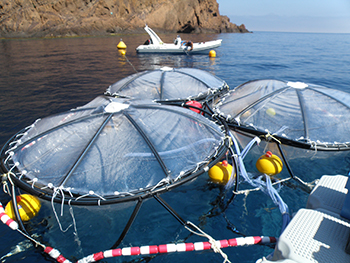
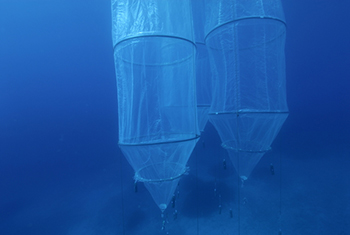
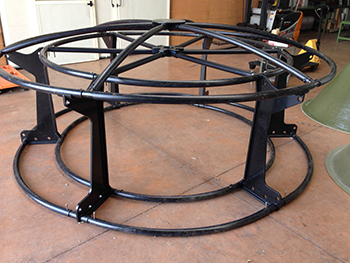
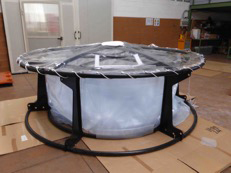
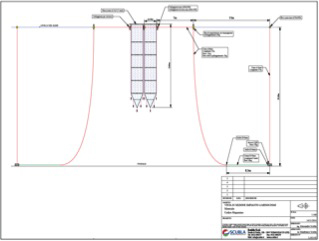
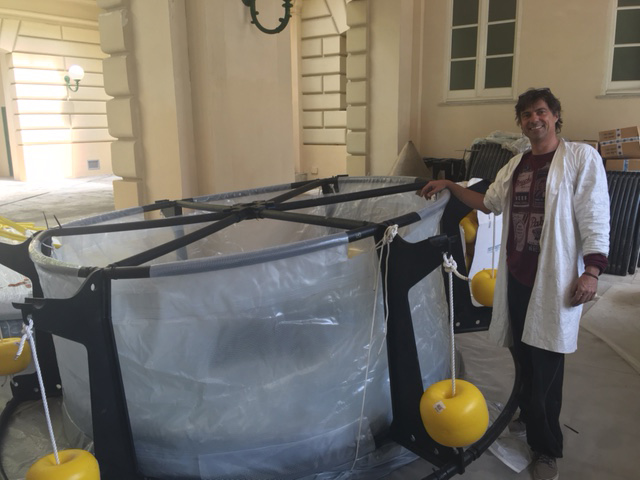 Tra il parco di strumentazioni oceanografiche, la SZN dispone di un set di mesocosmi pelagici realizzati ad-hoc per esperimenti in situ controllati in acque costiere. Questi mesocosmi, di numero 6, hanno una capacita di circa 100 m3, con una profondità di 15 metri. Sono muniti di un sistema di campionamento a tre profondità, 0.2, 5 e 10 metri, e di sensori di temperatura e luce alle stesse profondità.
Questi sistemi permettono di realizzare esperimenti a mare per un periodo breve (< 1 mese) in periodo e zone protette da mare mosso o onde forti che potrebbero distruggere l’installazione.
I mesocosmi sono sistemi sperimentali che permettono di svolgere studi in situ sull’ecosistema pelagico, a scala intermedia tra i microcosmi setati in laboratorio e la complessità del mondo reale.
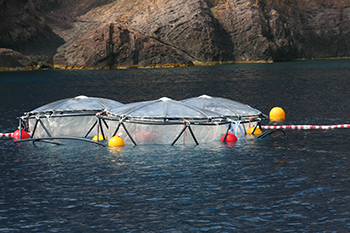 Queste strutture al momento dell’installazione in natura racchiudono la massa d’acqua presente, che quindi conserva tutte le proprietà dell’ecosistema. Non ci sono scambi con l’esterno, evitando avvezione ed influssi orizzontali e verticali.
I vantaggi degli studi con tali sistemi sono:
- Permette di studiare la risposta (nel tempo) dell’ecosistema ad una modifica ambientale indotta.
- Permette un disegno di campionamento complesso e ottimale per la comprensione del funzionamento degli ecosistemi pelagici costieri.
- Permette di investigare l’ecosistema o una parte dei suoi componenti in condizioni ambientali realistiche.
- Permette di investigare quasi tutta la rete trofica contemporaneamente.
- Consente lo studio delle interazioni in rete trofica.
- Consente lo studio delle interazioni tra i componenti e/o gruppi funzionali.
- Consente lo studio del flusso di materia all’interno dell’ecosistema e quindi di parametrizzare.
- Consente di compiere studi con replicati.
Responsabile: Francesco Paolo Patti
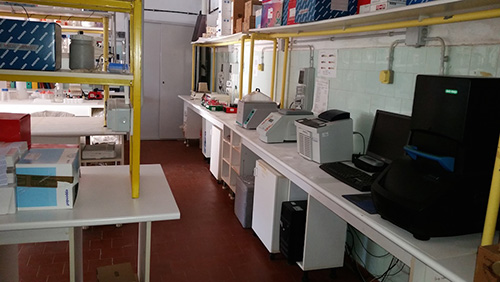
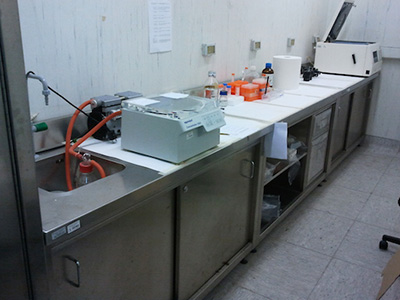
Nel Laboratorio di Tassonomia Integrata degli Organismi Marini si effettuano analisi di tassonomia classica, di filogenesi e filogeografia comparata di organismi marini con un approccio multidisciplinare integrato di tipo morfologico, molecolare, cellulare ed ecologico. Di seguito le principali attività svolte:
Attività
- Sorting di campioni di organismi marini, identificazione e conteggio di specie.
- Identificazione tassonomica di organismi marini con metodi morfologici tradizionali e molecolari avanzati (compresa la preparazione di voucher genetici ed ecologici).
- Estrazione e conservazione di DNA da differenti organismi (tessuto di alghe e invertebrati marini).
- Estrazione di RNA da differenti organismi (tessuto di alghe e invertebrati marini).
- Estrazione dei metaboliti secondari.
- Elettroforesi di minigel di agarosio e documentazione digitale.
- Amplificazione di DNA (ss, ds).
- Clonaggio di frammenti target di DNA (plasmidi preps, restrizione e analisi PCR).
- Real-Time fluorescent Polymerase Chain Reaction.
- DNA barcoding.
- Preparazione dei frammenti di DNA per sequenze (in collaborazione con l'Unità SZN di Biologia Molecolare e Bioinformatica).
Sistemi per la sperimentazione
- Messa a punto di protocolli specifici di laboratorio.
- Sistemi di analisi bioinformatica per: 1) studio della variabilità nucleotidica (creazione di software di analisi di metadati); 2) studio di confronto tra morfotipi attraverso metodi di morfometria geometrica.
Analisi
- Analisi delle sequenze di DNA compresa la ricostruzione di alberi filogenetici.
- Analisi della variabilità morfologica e del polimorfismo genetico.
- Analisi delle frequenze alleliche e della distribuzione genotipica.
- Analisi del polimorfismo dei frammenti di restrizione.
- Preparazione di campioni per analisi morfologiche (utilizzo di fissativi per osservazioni al microscopio ottico e al SEM) e per analisi molecolari (crioconservazione, fissativi standard e RNALater).
Strumentazione
- Stereomicroscopio.
- Vibratomo.
- Rotavapor.
- Cappa chimica.
- Cappa flusso laminare.
- Apparato per elettroforesi su minigel.
- Centrifuga refrigerata da banco.
- Spettrofotometro "Genequant Pro Classic".
- Termociclatori PCRs (Techne- Euroclone).
- RTPCR BIO RAD Opticon 2.
- Incubatore per culture cellulari.
- Bilancia analitica.
- Bagnetto termostatato (5l, +30°C/+120°C).
- Vortex da banco.
- Autoclave/Sterilizzatore.
- Macchina per la produzione di granulato di ghiaccio.
- Dewars per azoto liquido (5l+30l).
- Ultracongelatore verticale-86°C.
- Congelatori verticali -20°C.
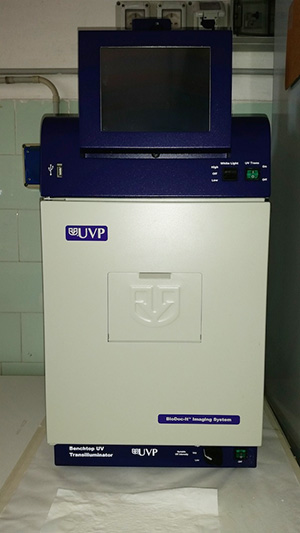
- UVP BioDoc imaging workstations per analisi immagini semplici e/o a fluorescenza di gel.
- Computer dedicato per analisi filogenetiche e data minin.





ABBaCo - Restauro Ambientale e Balneabilità del SIN Bagnoli-Coroglio
DIsCO - Diatom life cycles, molecular controls and contribution to ecosystem dynamics
EMSO MedIT - PON R&C 2007-2013 - PAC Potenziamento infrastrutture di ricerca pubblica - Linea di intervento B. Interventi per l’adeguamento e il consolidamento di infrastrutture per il monitoraggio ambientale
ESSEM COST Action ES0906 - Seagrass productivity: from genes to ecosystem management
GRASSMET - Climate change effects on seagrass secondary metabolism: ecological implications
HighGrass - High-CO2 effects on seagrass photosynthetic ecophysiology
INBALANCE - INvertebrate-BActeriaL Associations as hotspots of benthic Nitrogen Cycling in Estuarine ecosystems
IRMA - Implementazione e connessione Remota di una piattaforma per il monitoraggio in tempo reale di microorganismi MArini Finanziato con Decreto MIUR del 26-3-2014
OCEAN MEDICINES - Marie Skodowska-Curie Research and Innovation Staff Exchange (RISE) finanzia partners accademici e industriali per sviluppare composti da microorganismi marini con attività anticancerogena e anti-infettiva
PALEOPARK - Seagrass palaeo-records as a tool for the evaluation, diagnosis and prognosis of the evolution of species, communities, and processes in Spanish insular National Parks
PharmaDeep - Progetto Europeo EUROFLEET2 che finanzia una campagna oceanografica nei mari subantartici per campionare organismi a grande profondità (5000m) per potenziali applicazioni in campo biomedico
PharmaSea - Progetto Europeo focalizzato sulla ricerca, sviluppo e commercializzazione di nuove biomolecole da organismi marini
PON01_00117 Antigeni e Adiuvanti per Vaccini e Immunoterapia.
Capofila: Novartis Vaccines & Diagnostics srl
PON01_02093 Studio di nuove tecnologie e piattaforme tecnologiche per il miglioramento di processi produttivi di principi attivi farmaceutici di interesse industriale e ricerca di nuove molecole bioattive da sorgenti naturali
Capofila: Sanofi-Aventis S.p.A.
PON01_02782 Nuove strategie nanotecnologiche per la messa a punto di farmaci e presidi diagnostici diretti verso cellule cancerose circolanti (CTC).
Capofila: Biogem S.c.a r.l.
RESIGRASS - An holistic understanding of seagrass functioning and resilience to local-scale disturbances: from molecular to biogeographical scales
S&T MED - finanziato dal Programma Operativo ENPI CBC Mediterranean Sea Basin 2007/2013 dell’Unione Europea
SECRETED - Sustainable Exploitation of bio-based Compounds Revealed and Engineered from naTural sources
SEDREMED - Bioremediation of contaminated sediments in coastal areas of ex-industrial sites 2021-2024
ISIDORE - Integrated Services For Infectious Diseases Outbreak Research
HOTBIO - A holistic approach to training a new generation of scientists in marine biodiscovery
BlueRemediomics - ARNESSING THE MARINE MICROBIOME FOR NOVEL SUSTAINABLE BIOGENICS AND ECOSYSTEM SERVICES
Project @ CNR “SCANFISH” SEA COSMETICS AND NUTRACEUTICS: FROM FISHERY AND AQUACULTURE BYPRODUCTS
PON project “ALIFUN” Development of functional foods for the innovation of traditional Italian food products
PRoDiA: Droplet digital PCR to assess the occurrence and infer the ROle of prostaglandin in natural DIatom Assemblage in the Ionian coastal waters
I cookies sono piccoli file informatici contenenti informazioni sulla vostra visita al sito web che possono essere salvati sul vostro computer o altri dispositivi abilitati alla navigazione su internet, quali per esempio smartphone o tablet. Utilizziamo i cookie per rendere l’uso del sito più facile, per meglio adattare i suoi contenuti ai vostri interessi e bisogni e per aiutarci a velocizzare le vostre future esperienze ed attività sul nostro sito. I cookies agevolano e semplificano l'interazione tra l'utente e il sito permettendo al sito di ricordare le preferenze e le attività individuali, consentendo così un risparmio di tempo e contribuendo ad una navigazione più semplice ed efficiente. Infatti i cookies hanno la capacità di memorizzare informazioni sul sito (lingua, numero di visite, dimensione del carattere per esempio) e facilitare l'attuazione di diversi servizi (registrazione utente, contenuto del carrello, abbonamento ad news letter o ad aggiornamenti sui prodotti, etc.) Utilizziamo i cookies anche per realizzare statistiche anonime aggregate che ci consentono di capire come gli utenti usano il nostro sito e per consentirci di ottimizzare la struttura, i contenuti e i servizi di questo sito.
L’utilizzo dei cookies su questo sito non consente di identificarvi personalmente attraverso queste informazioni. È possibile modificare le impostazioni dei cookies che sono scaricati nel vostro computer o sul vostro dispositivo mobile attraverso le funzionalità del vostro browser. La maggior parte dei browser è inizialmente impostata per accettare i cookies automaticamente, tuttavia potete modificare queste impostazioni per bloccare i cookies o al fine di essere avvertirvi quando dei cookies sono inviati al vostro dispositivo Inoltre, è anche possibile eliminare i cookies che il browser ha già memorizzato sul dispositivo.. Per regolare o modificare le impostazioni del vostro browser dovete consultare il manuale d’istruzioni o alla schermata di aiuto del vostro browser. Disabilitare i cookies di cui facciamo uso potrebbe influenzare la vostra esperienza di navigazione, impedendovi di accedere in maniera efficiente a determinate parti del sito o di informazioni personalizzate quando lo visitate di nuovo. Ricodatevi di impostare in maniera uniforme i browser dei vostri dispositivi (computer, smartphone, tablet) così che ciascun dispositivo sia regolato per riflettere le vostre preferenze relative ai cookies. Potete ottenere informazioni dettagliate sulle funzionalità dei cookies e sulle modalità di attivazione e disattivazione sui maggiori browser su www.aboutcookies.org o http://www.allaboutcookies.org/privacy-policy.htm.
2019
Agnetta D, Badalamenti F, D’Anna G, Sinopoli M, Andaloro F, Vizzini S, Pipitone C (2019) Sizing up the role of predators on Mullus barbatus populations in Mediterranean trawl and no-trawl areas. Fisheries Research 213: 196-203. https://doi.org/10.1016/j.fishres.2019.01.023
Alagna A, D'Anna G, Musco L, Vega Fernández T, Gresta M, Pierozzi N, Badalamenti F (2019) Taking advantage of seagrass recovery potential to develop novel and effective meadow rehabilitation methods. Marine Pollution Bulletin 149: 110578. https://doi.org/10.1016/j.marpolbul.2019.110578
Ambrosino L, Vassalli QA, D’Agostino Y, Esposito R, Cetrangolo V, Caputi L, Amoroso A, Aniello F, D’Aniello S, Chatzigeorgiou M, Chiusano ML, Locascio A (2019) Functional conserved non-coding elements among tunicates and chordates. Developmental Biology 448: 101-110. https://doi.org/10.1016/j.ydbio.2018.12.012
Annunziata R, Ritter A, Fortunato AE, Manzotti A, Cheminant-Navarro S, Agier N, Huysman MJJ, Winge P, Bones AM, Bouget F-Y, Cosentino Lagomarsino M, Bouly J-P, Falciatore A (2019) bHLH-PAS protein RITMO1 regulates diel biological rhythms in the marine diatom Phaeodactylum tricornutum. Proceedings of the National Academy of Sciences 116: 13137. www.pnas.org/cgi/doi/10.1073/pnas.1819660116
Bargione G, Donato F, La Mesa M, Mazzoldi C, Riginella E, Vasapollo C, Virgili M, Lucchetti A (2019) Life-history traits of the spiny dogfish Squalus acanthias in the Adriatic Sea. Scientific Reports 9: 14317. https://doi.org/10.1038/s41598-019-50883-w
Basso L, Rizzo L, Marzano M, Intranuovo M, Fosso B, Pesole G, Piraino S, Stabili L (2019) Jellyfish summer outbreaks as bacterial vectors and potential hazards for marine animals and humans health? The case of Rhizostoma pulmo (Scyphozoa, Cnidaria). Science of the Total Environment 692: 305-318. https://doi.org/10.1016/j.scitotenv.2019.07.155
Battaglia P, Consoli P, Ammendolia G, D'Alessandro M, Bo M, Vicchio TM, Pedà C, Cavallaro M, Andaloro F, Romeo T (2019) Colonization of floats from submerged derelict fishing gears by four protected species of deep-sea corals and barnacles in the Strait of Messina (central Mediterranean Sea). Marine Pollution Bulletin 148: 61-65. https://doi.org/10.1016/j.marpolbul.2019.07.073
Battaglia P, Smith D, Ammendolia G, Cavallaro M, Maggio T, Consoli P, Guerrera MC, Andaloro F, Romeo T (2019) The last stage in the life history of the European conger eel Conger conger: a transformation before death. Journal of Fish Biology, 1– 6. https://doi.org/10.1111/jfb.14223
Bennett NJ, Cisneros-Montemayor AM, Blythe J, Silver JJ, Singh G, Andrews N, Calò A, Christie P, Di Franco A, Finkbeiner EM, Gelcich S, Guidetti P, Harper S, Hotte N, Kittinger JN, Le Billon P, Lister J, López de la Lama R, McKinley E, Scholtens J, Solås A-M, Sowman M, Talloni-Álvarez N, Teh LCL, Voyer M, Sumaila UR (2019) Towards a sustainable and equitable blue economy. Nature Sustainability 2: 991-993.
Bitetto I, Romagnoni G, Adamidou A, Certain G, Di Lorenzo M, Donnaloia M, Lembo G, Maiorano P, Milisenda G, Musumeci C, Ordines F, Pesci P, Peristeraki P, Pesic A, Sartor P, Spedicato MT (2019), Modelling spatio-temporal patterns of fish community size structure across the northern Mediterranean Sea: an analysis combining MEDITS survey data with environmental and anthropogenic drivers. Sci. Mar. 83S1 : 141-151.
Bonaglia S, Marzocchi U, Ekeroth N, Brüchert V, Blomqvist S, Hall POJ (2019) Sulfide oxidation in deep Baltic Sea sediments upon oxygenation and colonization by macrofauna. Marine Biology 166: 149. https://doi.org/10.1007/s00227-019-3597-y
Bosch-Belmar M, Escurriola A, Milisenda G, Fuentes VL, Piraino S. (2019) Harmful Fouling Communities on Fish Farms in the SW Mediterranean Sea: Composition, Growth and Reproductive Periods. Journal of Marine Science and Engineering. 7(9):288. https://doi.org/10.3390/jmse7090288
Bottari T, Savoca S, Mancuso M, Capillo G, Panarello G, Bonsignore M, Crupi R, Sanfilippo M, D'Urso L, Compagnini G, Neri F, Romeo T, Luna GM, Spanò N, Fazio E (2019) Plastics occurrence in the gastrointestinal tract of Zeus faber and Lepidopus caudatus from the Tyrrhenian Sea. Marine Pollution Bulletin 146: 408-416. https://doi.org/10.1016/j.marpolbul.2019.07.003
Cabanellas-Reboredo M, Vázquez-Luis M, Mourre B, Álvarez E, Deudero S, Amores Á, Addis P, Ballesteros E, Barrajón A, Coppa S, García-March JR, Giacobbe S, Casalduero FG, Hadjioannou L, Jiménez-Gutiérrez SV, Katsanevakis S, Kersting D, Mačić V, Mavrič B, Patti FP, Planes S, Prado P, Sánchez J, Tena-Medialdea J, de Vaugelas J, Vicente N, Belkhamssa FZ, Zupan I, Hendriks IE (2019) Tracking a mass mortality outbreak of pen shell Pinna nobilis populations: A collaborative effort of scientists and citizens. Scientific Reports 9: 13355. https://doi.org/10.1038/s41598-019-49808-4
Capotondi A, Jacox M, Bowler C, Kavanaugh M, Lehodey P, Barrie D, Brodie S, Chaffron S, Cheng W, Dias DF, Eveillard D, Guidi L, Iudicone D, Lovenduski NS, Nye JA, Ortiz I, Pirhalla D, Pozo Buil M, Saba V, Sheridan S, Siedlecki S, Subramanian A, de Vargas C, Di Lorenzo E, Doney SC, Hermann AJ, Joyce T, Merrifield M, Miller AJ, Not F, Pesant S (2019) Observational Needs Supporting Marine Ecosystems Modeling and Forecasting: From the Global Ocean to Regional and Coastal Systems. Frontiers in Marine Science 6.
Caputi L, Carradec Q, Eveillard D, Kirilovsky A, Pelletier E, Pierella Karlusich JJ, Rocha Jimenez Vieira F, Villar E, Chaffron S, Malviya S, Scalco E, Acinas SG, Alberti A, Aury J-M, Benoiston A-S, Bertrand A, Biard T, Bittner L, Boccara M, Brum JR, Brunet C, Busseni G, Carratalà A, Claustre H, Coelho LP, Colin S, D'Aniello S, Da Silva C, Del Core M, Doré H, Gasparini S, Kokoszka F, Jamet J-L, Lejeusne C, Lepoivre C, Lescot M, Lima-Mendez G, Lombard F, Lukeš J, Maillet N, Madoui M-A, Martinez E, Mazzocchi MG, Néou MB, Paz-Yepes J, Poulain J, Ramondenc S, Romagnan J-B, Roux S, Salvagio Manta D, Sanges R, Speich S, Sprovieri M, Sunagawa S, Taillandier V, Tanaka A, Tirichine L, Trottier C, Uitz J, Veluchamy A, Veselá J, Vincent F, Yau S, Kandels-Lewis S, Searson S, Dimier C, Picheral M, Coordinators TO, Bork P, Boss E, de Vargas C, Follows MJ, Grimsley N, Guidi L, Hingamp P, Karsenti E, Sordino P, Stemmann L, Sullivan MB, Tagliabue A, Zingone A, Garczarek L, d'Ortenzio F, Testor P, Not F, d'Alcalà MR, Wincker P, Bowler C, Iudicone D (2019) Community-Level Responses to Iron Availability in Open Ocean Plankton Ecosystems. Global Biogeochemical Cycles 33: 391-419. https://doi.org/10.1029/2018GB006022
Caputi, L, Toscano, F, Arienzo, M, Ferrara, L, Procaccini, G, Sordino, P. (2019) Temporal correlation of population composition and environmental variables in the marine invader Ciona robusta. Mar Ecol., 40:e12543. https://doi.org/10.1111/maec.12543
Cardini U, Bartoli M, Lücker S, Mooshammer M, Polzin J, Lee RW, Micić V, Hofmann T, Weber M, Petersen JM (2019) Chemosymbiotic bivalves contribute to the nitrogen budget of seagrass ecosystems. The Isme Journal. https://doi.org/10.1038/s41396-019-0486-9
Celussi M, Zoccarato L, Bernardi Aubry F, Bastianini M, Casotti R, Balestra C, Giani M, Del Negro P (2019) Links between microbial processing of organic matter and the thermohaline and productivity features of a temperate river-influenced Mediterranean coastal area. Estuarine, Coastal and Shelf Science 228: 106378. https://doi.org/10.1016/j.ecss.2019.106378
Colloca F, Milisenda G, Capezzuto F, Cau A, Garofalo G, Jadaud A, Kiparissis S, Micallef R, Montanini S, Thasitis I, Vallisneri M, Voliani A, Vrgoc N, Zupa W, Ordines F (2019) Spatial and temporal trend in the abundance and distribution of gurnards (Pisces: Triglidae) in the northern Mediterranean Sea. Scientia Marina, 83S1. https://doi.org/10.3989/scimar.04856.30A
D'Alelio D, Eveillard D, Coles VJ, Caputi L, Ribera d’Alcalà M, Iudicone D (2019) Modelling the complexity of plankton communities exploiting omics potential: From present challenges to an integrative pipeline. Current Opinion in Systems Biology 13: 68-74. https://doi.org/10.1016/j.coisb.2018.10.003
D'Alelio D, Hay Mele B, Libralato S, Ribera d'Alcalà M, Jordán F (2019) Rewiring and indirect effects underpin modularity reshuffling in a marine food web under environmental shifts. Ecology and Evolution 9: 11631-11646. https://doi.org/10.1002/ece3.5641
De Luca D, Kooistra WHCF, Sarno D, Gaonkar CC, Piredda R. (2019). Global distribution and diversity of Chaetoceros (Bacillariophyta, Mediophyceae): integration of classical and novel strategies. PeerJ 7:e7410 https://doi.org/10.7717/peerj.7410
De Luca D, Sarno D, Piredda R, Kooistra WHCF (2019) A multigene phylogeny to infer the evolutionary history of Chaetocerotaceae (Bacillariophyta). Molecular Phylogenetics and Evolution 140: 106575. https://doi.org/10.1016/j.ympev.2019.106575
Del Pasqua M, Gambi MC, Caricato R, Lionetto MG, Giangrande A (2019) Effects of short-term and long-term exposure to ocean acidification on carbonic anhydrase activity and morphometric characteristics in the invasive polychaete Branchiomma boholense (Annelida: Sabellidae): A case-study from a CO2 vent system. Marine Environmental Research 144: 203-212. https://doi.org/10.1016/j.marenvres.2019.01.011
Elbrächter M, Gottschling M, Hoppenrath M, Jahn R, Montresor M, Tillmann U, Kusber W-H (2019) (2686) Proposal to conserve the name Alexandrium against Blepharocysta (Dinophyceae). TAXON 68: 589-590.
Ferrante MI, Entrambasaguas L, Johansson M, Töpel M, Kremp A, Montresor M, Godhe A (2019) Exploring Molecular Signs of Sex in the Marine Diatom Skeletonema marinoi. Genes 10: 494. https://doi.org/10.3390/genes10070494
Franzitta G, Airoldi L (2019) Fish assemblages associated with coastal defence structures: Does the surrounding habitat matter? Regional Studies in Marine Science 31: 100743.
https://doi.org/10.1016/j.rsma.2019.100743
Gallo A, Boni R, Buia MC, Monfrecola V, Esposito MC, Tosti E (2019) Ocean acidification impact on ascidian Ciona robusta spermatozoa: New evidence for stress resilience. Science of the Total Environment 697: 134100. https://doi.org/10.1016/j.scitotenv.2019.134100
Gregory AC, Zayed AA, Conceição-Neto N, Temperton B, Bolduc B, Alberti A, Ardyna M, Arkhipova K, Carmichael M, Cruaud C, Dimier C, Domínguez-Huerta G, Ferland J, Kandels S, Liu Y, Marec C, Pesant S, Picheral M, Pisarev S, Poulain J, Tremblay J-É, Vik D, Acinas SG, Babin M, Bork P, Boss E, Bowler C, Cochrane G, de Vargas C, Follows M, Gorsky G, Grimsley N, Guidi L, Hingamp P, Iudicone D, Jaillon O, Kandels-Lewis S, Karp-Boss L, Karsenti E, Not F, Ogata H, Poulton N, Raes J, Sardet C, Speich S, Stemmann L, Sullivan MB, Sunagawa S, Wincker P, Culley AI, Dutilh BE, Roux S (2019) Marine DNA Viral Macro- and Microdiversity from Pole to Pole. Cell 177: 1109-1123.e1114. DOI:https://doi.org/10.1016/j.cell.2019.03.040
Hamdy R, Langeneck J, Atta MM, Dorgham MM, El-Rashidy HH, Musco L (2019) Diversity and ecology of crustaceans from shallow rocky habitats along the Mediterranean coast of Egypt. Marine Biodiversity 49: 221-233. https://doi.org/10.1007/s12526-017-0787-z
Hay Mele B, Russo L, D’Alelio D. (2019) Combining Marine Ecology and Economy to Roadmap the Integrated Coastal Management: A Systematic Literature Review. Sustainability, 11(16):4393. https://doi.org/10.3390/su11164393
Ibarbalz FM, Henry N, Brandão MC, Martini S, Busseni G, Byrne H, Coelho LP, Endo H, Gasol JM, Gregory AC, Mahé F, Rigonato J, Royo-Llonch M, Salazar G, Sanz-Sáez I, Scalco E, Soviadan D, Zayed AA, Zingone A, Labadie K, Ferland J, Marec C, Kandels S, Picheral M, Dimier C, Poulain J, Pisarev S, Carmichael M, Pesant S, Acinas SG, Babin M, Bork P, Boss E, Bowler C, Cochrane G, de Vargas C, Follows M, Gorsky G, Grimsley N, Guidi L, Hingamp P, Iudicone D, Jaillon O, Karp-Boss L, Karsenti E, Not F, Ogata H, Poulton N, Raes J, Sardet C, Speich S, Stemmann L, Sullivan MB, Sunagawa S, Wincker P, Pelletier E, Bopp L, Lombard F, Zinger L (2019) Global Trends in Marine Plankton Diversity across Kingdoms of Life. Cell 179: 1084-1097.e1021.
La Mesa M, Piepenburg D, Pineda-Metz SEA, Riginella E, Eastman JT (2019) Spatial distribution and habitat preferences of demersal fish assemblages in the southeastern Weddell Sea (Southern Ocean). Polar Biology 42: 1025-1040. https://doi.org/10.1007/s00300-019-02495-3
Langeneck J, Diez ME, Nygren A, Salazar-Vallejo S, Carrera-Parra LF, Vega Fernández T, Badalamenti F, Castelli A, Musco L (2019) Worming its way into Patagonia: an integrative approach reveals the cryptic invasion by Eulalia clavigera (Annelida: Phyllodocidae). Marine Biodiversity 49: 851-861. https://doi.org/10.1007/s12526-018-0864-y
Lauritano, C.; Ferrante, M.I.; Rogato, A. (2019) Marine Natural Products from Microalgae: An -Omics Overview. Mar. Drugs, 17, 269. https://doi.org/10.3390/md17050269
Legrand T, Di Franco A, Ser-Giacomi E, Caló A, Rossi V (2019) A multidisciplinary analytical framework to delineate spawning areas and quantify larval dispersal in coastal fish. Marine Environmental Research 151: 104761. https://doi.org/10.1016/j.marenvres.2019.104761
Leone A, Lecci RM, Milisenda G, Piraino S (2019) Mediterranean jellyfish as novel food: effects of thermal processing on antioxidant, phenolic, and protein contents. European Food Research and Technology. https://doi.org/10.1007/s00217-019-03248-6
Livi S, Romeo T, De Innocentiis S, Greco C, Battaglia P, Marino G, Andaloro F (2019) The genetic population structure of Thunnus thynnus (Linnaeus, 1758) in the Mediterranean Sea, a controversial issue. Journal of Applied Ichthyology 35: 436-443.https://doi.org/10.1111/jai.13867
Maggio T, Allegra A, Bosch-Belmar M, Cillari T, Cuttitta A, Falautano M, Milisenda G, Nicosia A, Perzia P, Sinopoli M, Castriota L (2019) Molecular identity of the non-indigenous Cassiopea sp. from Palermo Harbour (central Mediterranean Sea). Journal of the Marine Biological Association of the United Kingdom, 1-9. https://doi.org/10.1017/S0025315419000924
Marchini A, Ragazzola F, Vasapollo C, Castelli A, Cerrati G, Gazzola F, Jiang C, Langeneck J, Manauzzi MC, Musco L, Nannini M, Zekonyte J, Lombardi C (2019) Intertidal Mediterranean Coralline Algae Habitat Is Expecting a Shift Toward a Reduced Growth and a Simplified Associated Fauna Under Climate Change. Frontiers in Marine Science 6. https://doi.org/10.3389/fmars.2019.00106
Marín‐Guirao, L, Entrambasaguas, L, Ruiz, JM, Procaccini, G. (2019) Heat‐stress induced flowering can be a potential adaptive response to ocean warming for the iconic seagrass Posidonia oceanica. Mol Ecol., 00: 1– 6. https://doi.org/10.1111/mec.15089
Mazzocchi, M.G. (2019). Oithona Baird, 1843. ICES Identification Leaflets for Plankton. No. 188, pp. 16. http://doi.org/10.17895/ices.pub.5254
Merquiol L, Romano G, Ianora A, D’Ambra I. (2019) Biotechnological Applications of Scyphomedusae. Marine Drugs. 17(11):604. https://doi.org/10.3390/md17110604
Migliaccio O, Pinsino A, Maffioli E, Smith AM, Agnisola C, Matranga V, Nonnis S, Tedeschi G, Byrne M, Gambi MC, Palumbo A (2019) Living in future ocean acidification, physiological adaptive responses of the immune system of sea urchins resident at a CO2 vent system. Science of the Total Environment 672: 938-950. https://doi.org/10.1016/j.scitotenv.2019.04.005
Moro S, Jona-Lasinio G, Block B, Micheli F, De Leo G, Serena F, Bottaro M, Scacco U, Ferretti F (2019) Abundance and distribution of the white shark in the Mediterranean Sea. Fish and Fisheries, 00:1–12. DOI: 10.1111/faf.12432
Morroni L, Sartori D, Costantini M, Genovesi L, Magliocco T, Ruocco N, Buttino I (2019) First molecular evidence of the toxicogenetic effects of copper on sea urchin Paracentrotus lividus embryo development. Water Research 160: 415-423 https://doi.org/10.1016/j.watres.2019.05.062
Muelbert JH, Nidzieko NJ, Acosta ATR, Beaulieu SE, Bernardino AF, Boikova E, Bornman TG, Cataletto B, Deneudt K, Eliason E, Kraberg A, Nakaoka M, Pugnetti A, Ragueneau O, Scharfe M, Soltwedel T, Sosik HM, Stanisci A, Stefanova K, Stéphan P, Stier A, Wikner J, Zingone A (2019) ILTER – The International Long-Term Ecological Research Network as a Platform for Global Coastal and Ocean Observation. Frontiers in Marine Science 6. https://doi.org/10.3389/fmars.2019.00527
Mutalipassi M, Mazzella V, Zupo V (2019) Ocean acidification influences plant-animal interactions: The effect of Cocconeis scutellum parva on the sex reversal of Hippolyte inermis. Plos One 14: e0218238. https://doi.org/10.1371/journal.pone.0218238
Nuzzo G., Gallo C., D’Ippolito G., Manzo E., Ruocco N., Russo E., Carotenuto Y., Costantini M., Zupo V., Sardo A. and Fontana A. (2019). UPLC–MS/MS Identification of Sterol Sulfates in Marine Diatoms. Mar. Drugs, 17(1), 10; https://doi.org/10.3390/md17010010
Palma G, Mizar Formentin S, Zanuttigh B, Contestabile P, Vicinanza D. (2019) Numerical Simulations of the Hydraulic Performance of a Breakwater-Integrated Overtopping Wave Energy Converter. Journal of Marine Science and Engineering. 7(2):38. https://doi.org/10.3390/jmse7020038
Patrizi N, Pulselli RM, Neri E, Niccolucci V, Vicinanza D, Contestabile P, Bastianoni S (2019) Lifecycle Environmental Impact Assessment of an Overtopping Wave Energy Converter Embedded in Breakwater Systems. Frontiers in Energy Research 7. https://doi.org/10.3389/fenrg.2019.00032
Pelusi A, Santelia ME, Benevenuto G, Godhe A, Montresor M (2019) The diatom Chaetoceros socialis: spore formation and preservation. European Journal of Phycology: 1-10. https://doi.org/10.1080/09670262.2019.1632935
Piazzese D, Bonanno A, Bongiorno D, Falco F, Indelicato S, Milisenda G, Vazzana I, Cammarata M (2019) Co-inertia multivariate approach for the evaluation of anthropogenic impact on two commercial fish along Tyrrhenian coasts. Ecotoxicology and Environmental Safety 182: 109435. https://doi.org/10.1016/j.ecoenv.2019.109435
Prada F, Musco L, Alagna A, Agnetta D, Beccari E, D’Anna G, Giacalone VM, Pipitone C, Vega Fernández T, Goffredo S, Badalamenti F (2019) Anthropogenic impact is negatively related to coral health in Sicily (Mediterranean Sea). Scientific Reports 9: 13469. https://doi.org/10.1038/s41598-019-49713-w
Rilov G, Fraschetti S, Gissi E, Pipitone C, Badalamenti F, Tamburello L, Menini E, Goriup P, Mazaris AD, Garrabou J, Benedetti-Cecchi L, Danovaro R, Loiseau C, Claudet J, Katsanevakis S (2019) A fast-moving target: achieving marine conservation goals under shifting climate and policies. Ecological Applications . https://doi.org/10.1002/eap.2009
Rossi S, Gravili C, Milisenda G, Bosch-Belmar M, De Vito D, Piraino S (2019) Effects of global warming on reproduction and potential dispersal of Mediterranean Cnidarians. The European Zoological Journal 86: 255-271. https://doi.org/10.1080/24750263.2019.1631893
Rossi S, Isla E, Bosch-Belmar M, Galli G, Gori A, Gristina M, Ingrosso G, Milisenda G, Piraino S, Rizzo L, Schubert N, Soares M, Solidoro C, Thurstan RH, Viladrich N, Willis TJ, Ziveri P (2019) Changes of energy fluxes in marine animal forests of the Anthropocene: factors shaping the future seascape. ICES Journal of Marine Science. https://doi.org/10.1093/icesjms/fsz147
Rossi S, Rizzo L, Duchêne J. (2019). Polyp expansion of passive suspension feeders: a red coral case study. PeerJ 7:e7076 https://doi.org/10.7717/peerj.7076
Ruocco M, De Luca P, Marín-Guirao L, Procaccini G (2019) Differential Leaf Age-Dependent Thermal Plasticity in the Keystone Seagrass Posidonia oceanica. Frontiers in Plant Science 10: 1556.
Ruocco, M., Marín-Guirao, L. & Procaccini, G. (2019) Within- and among-leaf variations in photo-physiological functions, gene expression and DNA methylation patterns in the large-sized seagrass Posidonia oceanica. Mar Biol, 166: 24. https://doi.org/10.1007/s00227-019-3482-8
Russo E, d’Ippolito G, Fontana A, Sarno D, D’Alelio D, Busseni G, Ianora A, von Elert E, Carotenuto Y (2019) Density-dependent oxylipin production in natural diatom communities: possible implications for plankton dynamics. The Isme Journal. https://doi.org/10.1038/s41396-019-0518-5
Russo E, Ianora A, Carotenuto Y (2019) Re-shaping marine plankton communities: effects of diatom oxylipins on copepods and beyond. Marine Biology 166: 9. https://doi.org/10.1007/s00227-018-3456-2
SABIA, L., COSTANZO, A., D’ALCALÀ, M., SAGGIOMO, V., ZINGONE, A., & MARGIOTTA, F. (2019). Assessing the quality of biogeochemical coastal data: a step-wise procedure. Mediterranean Marine Science, 20(1), 56-73. doi:http://dx.doi.org/10.12681/mms.15935
Saha M, Berdalet E, Carotenuto Y, Fink P, Harder T, John U, Not F, Pohnert G, Potin P, Selander E, Vyverman W, Wichard T, Zupo V, Steinke M (2019) Using chemical language to shape future marine health. Frontiers in Ecology and the Environment. doi:10.1002/fee.2113
Sahm A, Almaida-Pagán P, Bens M, Mutalipassi M, Lucas-Sánchez A, de Costa Ruiz J, Görlach M, Cellerino A (2019) Analysis of the coding sequences of clownfish reveals molecular convergence in the evolution of lifespan. BMC Evolutionary Biology 19: 89. https://doi.org/10.1186/s12862-019-1409-0
Salazar G, Paoli L, Alberti A, Huerta-Cepas J, Ruscheweyh H-J, Cuenca M, Field CM, Coelho LP, Cruaud C, Engelen S, Gregory AC, Labadie K, Marec C, Pelletier E, Royo-Llonch M, Roux S, Sánchez P, Uehara H, Zayed AA, Zeller G, Carmichael M, Dimier C, Ferland J, Kandels S, Picheral M, Pisarev S, Poulain J, Acinas SG, Babin M, Bork P, Boss E, Bowler C, Cochrane G, de Vargas C, Follows M, Gorsky G, Grimsley N, Guidi L, Hingamp P, Iudicone D, Jaillon O, Kandels-Lewis S, Karp-Boss L, Karsenti E, Not F, Ogata H, Pesant S, Poulton N, Raes J, Sardet C, Speich S, Stemmann L, Sullivan MB, Sunagawa S, Wincker P (2019) Gene Expression Changes and Community Turnover Differentially Shape the Global Ocean Metatranscriptome. Cell 179: 1068-1083.e1021.
Samuiloviene A, Bartoli M, Bonaglia S, Cardini U, Vybernaite-Lubiene I, Marzocchi U, Petkuviene J, Politi T, Zaiko A, Zilius M (2019) The Effect of Chironomid Larvae on Nitrogen Cycling and Microbial Communities in Soft Sediments. Water 11: 1931. https://doi.org/10.3390/w11091931
Santos M, Oliveira PB, Moita MT, David H, Caeiro MF, Zingone A, Amorim A, Silva A (2019) Ocurrence of Ostreopsis in two temperate coastal bays (SW iberia): Insights from the plankton. Harmful Algae 86: 20-36. https://doi.org/10.1016/j.hal.2019.03.003
Saviano S, Kalampokis A, Zambianchi E, Uttieri M (2019) A year-long assessment of wave measurements retrieved from an HF radar network in the Gulf of Naples (Tyrrhenian Sea, Western Mediterranean Sea). Journal of Operational Oceanography 12: 1-15. https://doi.org/10.1080/1755876X.2019.1565853
Savoca S, Capillo G, Mancuso M, Faggio C, Panarello G, Crupi R, Bonsignore M, D'Urso L, Compagnini G, Neri F, Fazio E, Romeo T, Bottari T, Spanò N (2019) Detection of artificial cellulose microfibers in Boops boops from the northern coasts of Sicily (Central Mediterranean). Science of the Total Environment 691: 455-465. https://doi.org/10.1016/j.scitotenv.2019.07.148
She J, Muñiz Piniella Á, Benedetti-Cecchi L, Boehme L, Boero F, Christensen A, Crowe T, Darecki M, Nogueira E, Gremare A, Hernandez F, Kouts T, Kromkamp J, Petihakis G, Sousa Pinto I, Reissmann JH, Tuomi L, Zingone A (2019) An Integrated Approach to Coastal and Biological Observations. Frontiers in Marine Science 6. https://doi.org/10.3389/fmars.2019.00314
Sinopoli M, Lauria V, Garofalo G, Maggio T, Cillari T (2019) Extensive use of Fish Aggregating Devices together with environmental change influenced the spatial distribution of a tropical affinity fish. Scientific Reports 9: 4934. https://doi.org/10.1038/s41598-019-41421-9
Svetlichny L, Hubareva E, Khanaychenko A, Uttieri M (2019) Response to salinity and temperature changes in the alien Asian copepod Pseudodiaptomus marinus introduced in the Black Sea. Journal of Experimental Zoology Part A: Ecological and Integrative Physiology 331: 416-426. https://doi.org/10.1002/jez.2309
Uttieri M, Nihongi A, Hinow P, Motschman J, Jiang H, Alcaraz M, Strickler JR (2019) Copepod manipulation of oil droplet size distribution. Scientific Reports 9: 547. DOI:10.1038/s41598-018-37020-9
Valvassori G, Benedetti M, Regoli F, Gambi MC (2019) Antioxidant Efficiency of Platynereis spp. (Annelida, Nereididae) under Different pH Conditions at a Vent’s System. Journal of Marine Biology 2019: 9. https://doi.org/10.1155/2019/8415916.
Vega Fernández T, Badalamenti F, Bonaviri C, Di Trapani F, Gianguzza P, Noè S, Musco L (2019) Synergistic reduction of a native key herbivore performance by two non-indigenous invasive algae. Marine Pollution Bulletin 141: 649-654. https://doi.org/10.1016/j.marpolbul.2019.02.073
Zingone A, D’Alelio D, Mazzocchi MG, Montresor M, Sarno D, LTER-MC team (2019) Time series and beyond: multifaceted plankton research at a marine Mediterranean LTER site. In: Mazzocchi MG, Capotondi L, Freppaz M, Lugliè A, Campanaro A (Eds) Italian Long-Term Ecological Research for understanding ecosystem diversity and functioning. Case studies from aquatic, terrestrial and transitional domains. Nature Conservation 34: 273-310. https://doi.org/10.3897/natureconservation.34.30789
Zupo V, Graber G, Kamel S, Plichta V, Granitzer S, Gundacker C, Wittmann KJ (2019) Mercury accumulation in freshwater and marine fish from the wild and from aquaculture ponds. Environmental Pollution 255: 112975. https://doi.org/10.1016/j.envpol.2019.112975
Zupo V, Mutalipassi M, Glaviano F, Buono AC, Cannavacciuolo A, Fink P (2019) Inducers of settlement and metamorphosis of the shrimp Hippolyte inermis Leach in Posidonia oceanica. Scientific Reports 9: 12336. https://doi.org/10.1038/s41598-019-48110-7
2018
Amaro T., Bertocci I., Queiros A.M., Rastelli E., Borgersen G., Brkljacic M., Nunes J., Sorensen K., Danovaro R., Widdicombe S. (2018). Effects of sub-seabed CO2 leakage: short- and medium-term responses of benthic macrofaunal assemblages. Marine Pollution Bulletin, 128: 519-526.
Amato A, Sabatino V, Nylund GM, Bergkvist J, Basu S, Andersson MX, Sanges R, Godhe A, Kiørboe T, Selander E, Ferrante MI (2018) Grazer-induced transcriptomic and metabolomic response of the chain-forming diatom Skeletonema marinoi. The ISME Journal, 12, 1594–1604, . doi:10.1038/s41396-018-0094-0
Barco A, Aissaoui C, Houart R, Bonomolo G, Crocetta F, Oliverio M (2018) Revision of the Ocinebrina aciculata species complex (Mollusca: Gastropoda: Muricidae) in the northeastern Atlantic Ocean and Mediterranean Sea. Journal of Molluscan Studies 84: 19-29.
Bednarz V.N., Naumann M.S., Cardini U., van Hoytema N., Rix L., Al-Rshaidat M.M.D., Wild C. (2018). Contrasting seasonal responses in dinitrogen fixation between shallow and deep-water colonies of the model coral Stylophora pistillata in the northern Red Sea. PLOS ONE, https://doi.org/10.1371/journal.pone.0199022.
Brennecke P., Ferrante M.I., Johnston I.A. and Smith D. (2018) Project Report: A Collaborative European Approach to Accelerating Translational Marine Science. Journal of Marine Science Engineering, 6(81), doi:10.3390/jmse6030081.
Brillatz T., Lauritano C., Jacmin M., Khamma S., Marcourt L., Righi D., Romano G., Esposito F., Ianora A., Queiroz E.F., Wolfender J.-L., Crawford A. (2018). Zebrafish-based identification of the antiseizure nucleoside inosine from the marine diatom Skeletonema marinoi. PLoS ONE 13(4): e0196195.
Cardini U, van Hoytema N, Bednarz VN, Al-Rshaidat MMD, Wild C (2018) N-2 fixation and primary productivity in a red sea Halophila stipulacea meadow exposed to seasonality. Limnology and Oceanography 63: 786-798.
Carradec Q, Pelletier E, Da Silva C, Alberti A, Seeleuthner Y, Blanc-Mathieu R, Lima-Mendez G, Rocha F, Tirichine L, Labadie K, Kirilovsky A, Bertrand A, Engelen S, Madoui MA, Meheust R, Poulain J, Romac S, Richter DJ, Yoshikawa G, Dimier C, Kandels-Lewis S, Picheral M, Searson S, Jaillon O, Aury JM, Karsenti E, Sullivan MB, Sunagawa S, Bork P, Not F, Hingamp P, Raes J, Guidi L, Ogata H, de Vargas C, Iudicone D, Bowler C, Wincker P (2018) A global ocean atlas of eukaryotic genes. Nature Communications 9.
Carreras C, Pascual M, Tomas J, Marco A, Hochscheid S, Castillo JJ, Gozalbes P, Parga M, Piovano S, Cardona L (2018) Sporadic nesting reveals long distance colonisation in the philopatric loggerhead sea turtle (Caretta caretta) (vol 8, 1435, 2018). Scientific Reports 8.
Castellano I, Migliaccio O, Ferraro G, Maffioli E, Marasco D, Merlino A, Zingone A, Tedeschi G, Palumbo A (2018) Biotic and environmental stress induces nitration and changes in structure and function of the sea urchin major yolk protein toposome. Scientific Reports 8.
Ceccherelli G., Oliva S, Pinna S, Piazzi L, Procaccini G., Marin-Guirao L, Dattolo E, Gallia R, La Manna G, Gennaro P, Costa MM, Barrote I, Silva J, Bulleri F (2018). Seagrass collapse due to synergistic stressors is not anticipated by phenological changes. Oecologia DOI 10.1007/s00442-018-4075-9.
Consoli P, Andaloro F, Altobelli C, Battaglia P, Campagnuolo S, Canese S, Castriota L, Cillari T, Falautano M, Peda C, Perzia P, Sinopoli M, Vivona P, Scotti G, Esposito V, Galgani F, Romeo T (2018) Marine litter in an EBSA (Ecologically or Biologically Significant Area) of the central Mediterranean Sea: Abundance, composition, impact on benthic species and basis for monitoring entanglement. Environmental Pollution 236: 405-415.
D'Ambra I, Graham WM, Carmichael RH, Hernandez FJ (2018) Dietary overlap between jellyfish and forage fish in the northern Gulf of Mexico. Marine Ecology Progress Series 587: 31-40.
Endredi A, Senanszky V, Libralato S, Jordan F (2018) Food web dynamics in trophic hierarchies. Ecological Modelling 368: 94-103.
Escalera L., Italiano A., Pistocchi R., Montresor M. And Zingone A. (2018). Gonyaulax hyalina and Gonyaulax fragilis (Dinoflagellata), two names associated with ‘mare sporco’, indicate the same species. Phycologia, 57(4), 453–464.
Esposito V, Andaloro F, Canese S, Bortoluzzi G, Bo M, Di Bella M, Italiano F, Sabatino G, Battaglia P, Consoli P, Giordano P, Spagnoli F, La Cono V, Yakimov MM, Scotti G, Romeo T (2018) Exceptional discovery of a shallow-water hydrothermal site in the SW area of Basiluzzo islet (Aeolian archipelago, South Tyrrhenian Sea): An environment to preserve. Plos One 13.
Foo S.A., Byrne M., Gambi MC (2018). Residing at low pH matters, resilience of the egg jelly coat of sea urchins living at a CO2 vent site. Marine Biology, 165:97 https://doi.org/10.1007/s00227-018-3359-2
Franco J.N., Tuya F., Bertocci I., Rodriguez-Garcia L., Martinez B., Sousa-Pinto I., Arenas F. (2018). The ‘golden kelp’ Laminaria ochroleuca under global change: integrating multiple eco-physiological responses with species distribution models. JOURNAL OF ECOLOGY, 106: 47-58.
Galasso C, Orefice I, Toscano A, Vega Fernández T, Musco L, Brunet C, Sansone C, Cirino P. (2018) Food Modulation Controls Astaxanthin Accumulation in Eggs of the Sea Urchin Arbacia lixula. Marine Drugs, 16(6):186. https://doi.org/10.3390/md16060186
Gennari R, Lozar F, Turco E, Dela Pierre F, Lugli S, Manzi V, Natalicchio M, Roveri M, Schreiber BC, Taviani M (2018) Integrated stratigraphy and paleoceanographic evolution of the pre-evaporitic phase of the Messinian salinity crisis in the Eastern Mediterranean as recorded in the Tokhni section (Cyprus island). Newsletters on Stratigraphy 51: 33-55.
Giordano D., Costantini M., Coppola D., Lauritano C., Núñez Pons L., Ruocco N., di Prisco G., Ianora A., Verde C. (2018). Biotechnological Applications of Bioactive Peptides From Marine Sources. Advances in Microbial Physiology, https://doi.org/10.1016/bs.ampbs.2018.05.002.
Gu, H., Li, X., Chomérat, N., Luo, Z., Sarno D, Gourvil P, Balzano, S., Siano, R. (2018) Adenoides sinensis, a new sand-dwelling dinoflagellate species from China and reexamination of Adenoides eludens from an Atlantic strain. Phycologia, 57 (2): 179-90. doi: 10.2216/17-76.1.
Jahnke M., D’Esposito D., Orrù L., Lamontanara A., Dattolo E., Badalamenti F., Mazzuca S., Procaccini G., Orsini L. (2018) Adaptive responses along a depth and a latitudinal gradient in the endemic seagrass Posidonia oceanica. Heredity, https://doi.org/10.1038/s41437-018-0103-0.
Kroth P.G., Bones AM., Daboussi F, Ferrante MI, Jaubert M, Kolot M, Nymark M, Río Bártulos Ca, Ritter A, Russo MT, Winge P, Falciatore A (2018). New Genetic Tools for Diatoms: Achievements and Goals. Review. Plant Cell Reports, 37:1401–1408.; DOI: 10.1007/s00299-018-2334-1
Kumar A., AbdElgawad H., Castellano I., Selim S., Beemster G.T.S., Asard H., Buia M.C., Palumbo A. (2018). Effects of ocean acidification on the levels of primary and secondary metabolites in the brown macroalga Sargassum vulgare at different time scales. Science of the Total Environment, https://doi.org/10.1016/j.scitotenv.2018.06.176.
La Mesa M., Donato F., Riginella E., Mazzoldi C. (2018). Life history traits of a poorly known pelagic fish, Aethotaxis mitopteryx (Perciformes, Notothenioidei) from the Weddell Sea. Polar Biology, https://doi.org/10.1007/s00300-018-2318-1
Langeneck J, Diez ME, Nygren A, Salazar-Vallejo S, Carrera-Parra LF, Vega Fernández T, Badalamenti F, Castelli A, Musco L (in press). Worming its way into Patagonia: an integrative approach reveals the cryptic invasion by Eulalia clavigera (Annelida: Phyllodocidae). Marine Biodiversity. https://doi.org/10.1007/s12526-018-0864-y
Langeneck J, Musco L, Busoni G, Conese I, Aliani S, Castelli A (2018) Syllidae (Annelida: Phyllodocida) from the deep Mediterranean Sea, with the description of three new species. Zootaxa 4369: 197-220.
Lauritano C, Martin J, de la Cruz M, Reyes F, Romano G, Ianora A. (2018). First identification of marine diatoms with anti-tuberculosis activity. Scientific Reports, 8:2284. DOI:10.1038/s41598-018-20611-x
Lucey NM, Lombardi C, Florio M, Rundle SD, Calosi P, Gambi MC (2018) A comparison of life-history traits in calcifying Spirorbinae polychaetes living along natural pH gradients. Marine Ecology Progress Series 589: 141-152.
Mordret, S., Piredda, R., Vaulot, D., Montresor, M., Kooistra, W. H. C. F., Sarno, D. (2018). DinoREF: a curated dinoflagellate (Dinophyceae) reference database for the 18S rRNA gene. Molecular Ecology Resources, 1-14. doi: 10.1111/1755-0998.12781.
Morabito, G., Mazzocchi, M.G., Salmaso, N., Zingone, A., Bergami, C., Flaim, G., … Di Capua, I., …, Margiotta, F., … Sarno, D., et al. (2018) Plankton dynamics across the freshwater, transitional and marine research sites of the LTER-Italy Network. Patterns, fluctuations, drivers. Science of the Total Environment, 627:373-87.
doi: https://doi.org/10.1016/j.scitotenv.2018.01.153.
Musco L., Vega Fernández T., Caroselli E., Roberts J.M. and Badalamenti F. (2018). Protocooperation among small polyps allows the coral Astroides alycularis to prey on large jellyfish. Ecology, pp. 1–2.
Mutalipassi M, Di Natale M, Mazzella V, Zupo V (2018) Automated culture of aquatic model organisms: shrimp larvae husbandry for the needs of research and aquaculture. Animal 12: 155-163.
Nappo A, Rey X, Pellegrini D, Bonomolo G, Crocetta F (2018) Revisiting the disjunct distribution of Conopleura Hinds, 1844 (Mollusca: Gastropoda: Drilliidae). Zootaxa 4392: 567-587.
Nardelli BB, Mulet S, Iudicone D (2018) Three-Dimensional Ageostrophic Motion and Water Mass Subduction in the Southern Ocean. Journal of Geophysical Research-Oceans 123: 1533-1562.
Noè S, Badalamenti F, Bonaviri C, Musco L, Vega Fernández L, Vizzini S, Gianguzza P (in press). Food selection of a generalist herbivore exposed to native and non-native seaweeds. Marine Pollution Bulletin. http://doi.org/10.1016/j.marpolbul.2017.10.015
Pastore R., Uttieri M., Bianco G., Ribera d’Alcalà M. and Mazzocchi M.G. (2018). Distinctive diffusive properties of swimming planktonic copepods in different environmental conditions. Eur. Phys. J. E, 41: 79.
Polese G, Semprucci F, Campoli L, Maselli V, d'Alcala MR, Balsamo M, Di Cosmo A (2018) Meiofaunal assemblages of the bay of Nisida and the environmental status of the Phlegraean area (Naples, Southern Italy). Marine Biodiversity 48: 127-137.
Porzio L, Buia Mc, Ferretti V, Lorenti M, Rossi M, Trifuoggi M, Vergara A, Arena C (2018). Photosynthesis and mineralogy of Jania rubens at low/high pCO2: a future perspective. Science of total Environment, 628-629: 375-383. doi: 10.1016/j.scitotenv.2018.02.065.
Röckmann C, Vega Fernández T, Pipitone C (2018). Regulation and planning in the Mediterranean Sea. In: Johnson K, Dalton G, Masters I (eds.) Building Industries at Sea - ‘Blue Growth’ and the new maritime economy. River Publishers, Gistrup: 365-401. ISBN: 978-87-93609-26-6 (Hardback); 978-87-93609-25-9 (Ebook). https://doi.org/10.13052/rp-9788793609259
Romani L, Rolan E, Mifsud C, Crocetta F (2018) Redescription of Retilaskeya horrida (di Monterosato, 1874) comb. nov and a re-evaluation of the taxonomic affinity of the genus Retilaskeya (Caenogastropoda: Triphoroidea). Journal of Natural History 52: 115-135.
Romano G (2018) Stem cells in marine biotechnology. Isj-Invertebrate Survival Journal 15: 112-112.
Ruggiero MV, D'Alelio D, Ferrante MI, Santoro M, Vitale L, Procaccini G, Montresor M (2018) Clonal expansion behind a marine diatom bloom. Isme Journal 12: 463-472.
Ruocco N, Costantini S, Zupo V, Lauritano C, Caramiello D, Ianora A, Budillon A, Romano G, Nuzzo G, D'Ippolito G, Fontana A, Costantini M (2018) Toxigenic effects of two benthic diatoms upon grazing activity of the sea urchin: morphological, metabolomic and de novo transcriptomic analysis. Scientific Reports 8.
Sannino F, Sansone C, Galasso C, Kildgaard S, Tedesco P, Fani R, Marino G, de Pascale D, Ianora A, Parrilli E, Ostenfeld Larsen T, Romano G, Tuttino ML. (2018). Pseudoalteromonas haloplanktis TAC125 produces 4-hydroxybenzoic acid that induces pyroptosis in human A459 lung adenocarcinoma cells. Scientific Reports, 8:1190. DOI:10.1038/s41598-018-19536-2
Sansone C., Nuzzo G., Galasso C., Casotti R., Fontana A., Romano G., Ianora A. (2018) The Marine Dinoflagellate Alexandrium andersoni Induces Cell Death in Lung and Colorectal Tumor Cell Lines. Marine biotechnology, https://doi.org/10.1007/s10126-018-9817-5.
Seeleuthner Y, Mondy S, Lombard V, Carradec Q, Pelletier E, Wessner M, Leconte J, Mangot JF, Poulain J, Labadie K, Logares R, Sunagawa S, de Berardinis V, Salanoubat M, Dimier C, Kandels-Lewis S, Picheral M, Searson S, Pesant S, Poulton N, Stepanauskas R, Bork P, Bowler C, Hingamp P, Sullivan MB, Iudicone D, Massana R, Aury JM, Henrissat B, Karsenti E, Jaillon O, Sieracki M, de Vargas C, Wincker P, Tara Oceans C (2018) Single-cell genomics of multiple uncultured stramenopiles reveals underestimated functional diversity across oceans. Nature Communications 9.
Traboni C., Mammola S.D., Ruocco M., Ontoria Y., Ruiz J.M., Procaccini G., Marín-Guirao L. (2018) Investigating cellular stress response to heat stress in the seagrass Posidonia oceanica in a global change scenario. Marine Environmental Research, https://doi.org/10.1016/j.marenvres.2018.07.007.
Tragin M, Zingone A, Vaulot D (2018) Comparison of coastal phytoplankton composition estimated from the V4 and V9 regions of the 18S rRNA gene with a focus on photosynthetic groups and especially Chlorophyta. Environmental Microbiology 20: 506-520.
Travaglini A. & Crocetta F. (2018) Natural History Collections and Alien Species: an Overlooked Sample of Bursatella leachii Blainville, 1817 (Mollusca: Gastropoda: Aplysiida) Backdates its Confirmed Presence in Italy. Thalassas: An International Journal of Marine Sciences, https://doi.org/10.1007/s41208-018-0101-2.
Treguer P, Bowler C, Moriceau B, Dutkiewicz S, Gehlen M, Aumont O, Bittner L, Dugdale R, Finkel Z, Iudicone D, Jahn O, Guidi L, Lasbleiz M, Leblanc K, Levy M, Pondaven P (2018) Influence of diatom diversity on the ocean biological carbon pump. Nature Geoscience 11: 27-37.
Vincent FJ, Colin S, Romac S, Scalco E, Bittner L, Garcia Y, Lopes RM, Dolan JR, Zingone A, de Vargas C, Bowler C (2018) The epibiotic life of the cosmopolitan diatom Fragilariopsis doliolus on heterotrophic ciliates in the open ocean. ISME Journal 12: 1094-1108.
Wienberg C, Titschack J, Freiwald A, Frank N, Lundalv T, Taviani M, Beuck L, Schroder-Ritzrau A, Krengel T, Hebbeln D (2018) The giant Mauritanian cold-water coral mound province: Oxygen control on coral mound formation. Quaternary Science Reviews 185: 135-152.
Zhou C., Carotenuto Y., Vitiello V., Wu C., Zhang J., Buttino I. (2018). De novo transcriptome assembly and differential gene expression analysis of the calanoid copepod Acartia tonsa exposed to nickel nanoparticles. Chemosphere, 209: 163-172.
Book chapter
Amato, A., and Carotenuto, Y. (2018). Planktonic calanoids embark into the 'omics' era. In: Trends in Copepod Studies - Distribution, Biology and Ecology, edited by M. Uttieri. New York: Nova Science Publishers, Inc. pp 287-314. ISBN: 978-1 53612-593-1
2016
Addamo, A. M., Vertino, A., Stolarski, J., García-Jiménez, R., Taviani, M. and Machordom, A. (2016). Merging scleractinian genera: the overwhelming genetic similarity between solitary Desmophyllum and colonial Lophelia. BMC evolutionary biology 16.
Amaro, T., Huvenne, V., Allcock, A., Aslam, T., Davies, J., Danovaro, R., De Stigter, H., Duineveld, G., Gambi, C. and Gooday, A. (2016). The Whittard Canyon–A case study of submarine canyon processes. Progress in Oceanography 146, 38-57.
Amato, A., Fortini, S., Watteaux, R., Diano, M., Espa, S., Esposito, S., Ferrante, M. I., Peters, F., Iudicone, D. and d'Alcala, M. R. (2016). TURBOGEN: Computer-controlled vertically oscillating grid system for small-scale turbulence studies on plankton. Review of Scientific Instruments 87.
Balzano, S., Percopo, I., Siano, R., Gourvil, P., Chanoine, M., Marie, D., Vaulot, D. and Sarno, D. (2016) Morphological and genetic diversity of Beaufort Sea diatoms with high contributions from the Chaetoceros neogracilis species complex. Journal of Phycology, DOI: 10.1111/jpy.12489
Bastianini, M., Totti, C., Penna, A., De Lazzari, A. & Montresor, M. (2016). Dinoflagellate cyst production in the north-western Adriatic Sea. Medit. Mar. Sci.:DOI: http://dx.doi.org/10.12681/mms.1770.
Bertocci, I., Arenas, F., Cacabelos, E., Martins, G. M., Seabra, M. I., Álvaro, N. V., Fernandes, J. N., Gaião, R., Mamede, N., Mulas, M., Neto, A.I. (2016). Nowhere safe? Exploring the influence of urbanization across mainland and insular seashores in continental Portugal and the Azorean Archipelago. Marine Pollution Bulletin 114, 644–655.
Bonanno, A., Barra, M., Basilone, G., Genovese, S., Rumolo, P., Goncharov, S., Popov, S., Buongiorno Nardelli, B., Iudicone, D. and Procaccini, G. (2016). Environmental processes driving anchovy and sardine distribution in a highly variable environment: the role of the coastal structure and riverine input. Fisheries Oceanography 25, 471-490.
Brugnano, C., Granata, A., Guglielmo, L., Minutoli, R., Zagami, G. and Ianora, A. (2016). The deleterious effect of diatoms on the biomass and growth of early stages of their copepod grazers. Journal of Experimental Marine Biology and Ecology 476, 41-49.
Bulleri F, Badalamenti F, Iveša L, Mikac B, Musco L, Jaklin A, Rattray AJ, Vega Fernández T, Benedetti-Cecchi L (2016). The effects of an invasive seaweed on native communities vary along a gradient of land-based human impacts. Peer J 4:e1795 (https://doi.org/10.7717/peerj.1795).
Buttino, I., Hwang, J.-S., Romano, G., Sun, C.-K., Liu, T.-M., Pellegrini, D., Gaion, A. and Sartori, D. (2016). Detection of malformations in sea urchin plutei exposed to mercuric chloride using different fluorescent techniques. Ecotoxicology and Environmental Safety 123, 72-80.
Castellani, C., Licandro, P., Fileman, E., Di Capua, I. and Mazzocchi, M. G. (2016). Oithona similis likes it cool: evidence from two long-term time series. Journal of Plankton Research 38, 703-717.
Catanese, G., Montes, I., Iriondo, M., Estonba, A., Iudicone, D. and Procaccini, G. (2016). High resolution SNPs selection in Engraulis encrasicolus through Taqman OpenArray. Fisheries Research 177, 31-38.
Chust, G., Villarino, E., Chenuil, A., Irigoien, X., Bizsel, N., Bode, A., Broms, C., Claus, S., Fernandez de Puelles, M. L., Fonda-Umani, S., Hoarau, G., Mazzocchi, M.G., Mozetič, P., Vandepitte, L., Veríssimo, E., Zervoudaki, S., Borja, A. (2016). Dispersal similarly shapes both population genetics and community patterns in the marine realm. Scientific Reports 6.
Corriero, G., Pierri, C., Accoroni, S., Alabiso, G., Bavestrello, G., Barbone, E., Bastianini, M., Bazzoni, A. M., Aubry, F. B., Boero, F. Buia, M.C., Cabrini, M., Camatti, E., Cardone, F., Cataletto, B., Cattaneo Vietti, R., Cecere, E., Cibic, T., Colangelo, P., De Olazabal, A., D'Onghia, G., Finotto, S., Fiore, N., Fornasaro, D., Fraschetti, S., Gambi, M.C., Giangrande, A., Gravili, C., Guglielmo, R., Longo, C., Lorenti, M., Lugliè, A., Maiorano, P., Mazzocchi, M.G., Mercurio, M., Mastrototaro, F., Mistri, M., Monti, M., Munari, C., Musco, L., Nonnis Marzano, C., Padedda, B.C., Patti, F.P., Petrocelli, A., Piraino, S., Portacci, G., Pugnetti, A., Pulina, S., Romagnoli, T., Rosati, I., Sarno, D., Satta, C.T., Sechi, N., Schiaparelli, S., Scipione, B., Sion, L., Terlizzi, A., Tirelli, V., Totti, C., Tursi, A., Ungaro, N., Zingone, A., Zupo, V., Basset, A. (2016). Ecosystem vulnerability to alien and invasive species: a case study on marine habitats along the Italian coast. Aquatic Conservation-Marine and Freshwater Ecosystems 26, 392-409.
D’Alelio, D., Libralato, S., Wyatt, T. and d’Alcalà, M. R. (2016). Ecological-network models link diversity, structure and function in the plankton food-web. Scientific reports 6.
D'Alelio, D., Montresor, M., Mazzocchi, M. G., Margiotta, F., Sarno, D. and d'Alcalà, M. R. (2016). Plankton food-webs: to what extent can they be simplified? Advances in Oceanography and Limnology 7.
De Luca D., Catanese G., Procaccini G., Fiorito G. (2016). Octopus vulgaris in the Mediterranean sea: genetic diversity and population structure. Plos One 11(2): e0149496. doi:10.1371/journal.pone.0149496
D’Esposito D., Orrù L., Dattolo E., Bernardo L., Lamontara A., Orsini L., Serra I.A., Mazzuca S., Procaccini G. (2016). Annotation of "de novo" transcriptome in the seagrass Posidonia oceanica and SSR markers development. Scientific Data 3:160115 doi: 10.1038/sdata.2016.115.
Di Lorenzo M, Vega Fernández T, Badalamenti F, Guidetti P, Starr RM, Giacalone VM, Di Franco A, D’Anna G (2016). Diel activity and variability in habitat use of white sea bream in a temperate Marine Protected Area. Marine Environmental Research 116:1-9 (http://dx.doi.org/10.1016/j.marenvres.2016.02.007).
Farrant, G. K., Dore, H., Cornejo-Castillo, F. M., Partensky, F., Ratin, M., Ostrowski, M., Pitt, F. D., Wincker, P., Scanlan, D. J., Iudicone, D., Acinasb, S.G., Garczareka, L. (2016). Delineating ecologically significant taxonomic units from global patterns of marine picocyanobacteria. Proceedings of the National Academy of Sciences of the United States of America 113, E3365-E3374.
Forster, D., Dunthorn, M., Mahé, F., Dolan, J. R., Audic, S., Bass, D., Bittner, L., Boutte, C., Christen, R. and Claverie, J.-M. (2016). Benthic protists: the under-charted majority. FEMS microbiology ecology, fiw120.
Fortunato, A. E., Jaubert, M., Enomoto, G., Bouly, J.-P., Raniello, R., Thaler, M., Malviya, S., Bernardes, J. S., Rappaport, F. and Gentili, B. (2016). Diatom phytochromes reveal the existence of far-red light based sensing in the ocean. The Plant Cell, tpc. 00928.2015.
Gallina, A. A., Palumbo, A. and Casotti, R. (2016). Oxidative pathways in response to polyunsaturated aldehydes in the marine diatom Skeletonema marinoi (Bacillariophyceae). Journal of phycology.
Gambi MC, Patti FP (2016). Ritrovamento di “perle” in un esemplare del mollusco bivalve Crassostrea gigas (Thurnberg) (Ostreidae, Bivalvia) a Salerno. Notiziario S.I.B.M. 69: 44-48.
Gambi MC, Lorenti M, Patti FP, Zupo V (2016). An annotated list of alien marine species of the Ischia Island (Gulf of Naples). Notiziario S.I.B.M. 70: 64-68.
Gambi MC, Musco L, Giangrande A, Badalamenti F, Micheli F, Kroeker KJ. (2016). Distribution and functional traits of polychaetes in a CO2 vent system: winners and losers among closely related species. Marine Ecology Progress Series, 550:121-13.
Gara, A.B., R.B.A. Kolsi, R. Chaaben, N. Hammami, M. Kammoun, F.P. Patti, A. El Feki, L. Fki, H. Belghith and K. Belghith (2016). Inhibition of key digestive enzymes related to hyperlipidemia and protection of liver-kidney functions by Cystoseira crinita sulphated polysaccharide in high-fat diet-fed rats. Biomedicine & Pharmacotherapy 85: 517-526. DOI: 10.1016/j.biopha.2016.11.059.
Garrido, J. L., Brunet, C. and Rodríguez, F. (2016). Pigment variations in Emiliania huxleyi (CCMP370) as a response to changes in light intensity or quality. Environmental microbiology 18: 4412–4425. doi:10.1111/1462-2920.13373.
Gherardi, M., Amato, A., Bouly, J.-P., Cheminant, S., Ferrante, M. I., d'Alcalá, M. R., Iudicone, D., Falciatore, A. and Lagomarsino, M. C. (2016). Regulation of chain length in two diatoms as a growth-fragmentation process. Physical Review E 94, 022418.
Guidi, L., Chaffron, S., Bittner, L., Eveillard, D., Larhlimi, A., Roux, S., Darzi, Y., Audic, S., Berline, L., Brum, J. R., Coelho, L.P., Espinoza, J.C., Malviya, S., Sunagawa, S., Dimier, C., Kandels-Lewis, S., Picheral, M., Poulain, J., Searson, S.; Tara Oceans Consortium Coordinators, Stemmann, L., Not, F., Hingamp, P., Speich, S., Follows, M., Karp-Boss, L., Boss, E., Ogata, H., Pesant, S., Weissenbach, J., Wincker, P., Acinas, S.G., Bork, P., de Vargas, C., Iudicone, D., Sullivan, M.B., Raes, J., Karsenti, E., Bowler, C., Gorsky, G. (2016). Plankton networks driving carbon export in the oligotrophic ocean. Nature 532, 465-+.
Iudicone, D., Rodgers, K. B., Plancherel, Y., Aumont, O., Ito, T., Key, R. M., Madec, G. and Ishii, M. (2016). The formation of the ocean’s anthropogenic carbon reservoir. Scientific reports 6.
Jahnke, M., Christensen, A., Micu, D., Milchakova, N., Sezgin, M., Todorova, V., Strungaru, S. and Procaccini, G. (2016). Patterns and mechanisms of dispersal in a keystone seagrass species. Marine Environmental Research 117, 54-62.
Jaspars, M., De Pascale, D., Andersen, J. H., Reyes, F., Crawford, A. D. and Ianora, A. (2016). The marine biodiscovery pipeline and ocean medicines of tomorrow. Journal of the Marine Biological Association of the United Kingdom 96, 151-158.
Kamenos N., Perna G., Gambi, M.C., Micheli F., Kroeker K. (2016) Coralline algae in a naturally acidified ecosystem persist by maintaining control of skeletal mineralogy and size. Proceedings Royal Society B (Biological Sciences), 283: 20161159. dx.doi.org/10.1098/rspb.2016.1159.
Kolsi, R. B. A., Fakhfakh, J., Krichen, F., Jribi, I., Chiarore, A., Patti, F. P., Blecker, C., Allouche, N., Belghith, H. and Belghith, K. (2016). Structural characterization and functional properties of antihypertensive Cymodocea nodosa sulfated polysaccharide. Carbohydrate Polymers.
Lauritano, C., Andersen, J. H., Hansen, E., Albrigtsen, M., Escalera, L., Esposito, F., Helland, K., Hanssen, K. Ø., Romano, G. and Ianora, A. (2016a). Bioactivity screening of microalgae for antioxidant, anti-inflammatory, anticancer, anti-diabetes and antibacterial activities. Frontiers in Marine Science 3, 68.
Lauritano C, Andersen JH, Hansen E, Albrigtsen M, Escalera L, Esposito F, Helland K, Hansen K Ø, Romano G, Ianora A. (2016). The potential of drug discovery from marine microalgae. Frontiers in Marine Biotechnology, May 2016, 3, 68.
Lauritano C and Ianora A. (2016). Marine Organisms with Anti-diabetes properties. Mar. Drugs, 14, 220; doi:10.3390/md14120220.
Lauritano, C., Romano, G., Roncalli, V., Amoresano, A., Fontanarosa, C., Bastianini, M., Braga, F., Carotenuto, Y. and Ianora, A. (2016b). New oxylipins produced at the end of a diatom bloom and their effects on copepod reproductive success and gene expression levels. Harmful Algae 55, 221-229.
Lescot, M., Hingamp, P., Kojima, K. K., Villar, E., Romac, S., Veluchamy, A., Boccara, M., Jaillon, O., Iudicone, D., Bowler, C., Wincker, P., Claverie, J., Ogata, H. (2016). Reverse transcriptase genes are highly abundant and transcriptionally active in marine plankton assemblages. Isme Journal 10, 1134-1146.
Lucey, N. M., Lombardi, C., Florio, M., DeMarchi, L., Nannini, M., Rundle, S., Gambi, M. C. and Calosi, P. (2016). An in situ assessment of local adaptation in a calcifying polychaete from a shallow CO2 vent system. Evolutionary Applications.
Maffucci, F., Corrado, R., Palatella, L., Borra, M., Marullo, S., Hochscheid, S., Lacorata, G. and Iudicone, D. (2016). Seasonal heterogeneity of ocean warming: a mortality sink for ectotherm colonizers. Scientific Reports 6.
Malviya, S., Scalco, E., Audic, S., Vincent, F., Veluchamy, A., Poulain, J., Wincker, P., Iudicone, D., de Vargas, C. and Bittner, L. (2016). Insights into global diatom distribution and diversity in the world’s ocean. Proceedings of the National Academy of Sciences, 201509523.
Marin-Guirao, L., Ruiz, J. M., Dattolo, E., Garcia-Munoz, R. and Procaccini, G. (2016). Physiological and molecular evidence of differential short-term heat tolerance in Mediterranean seagrasses. Scientific Reports 6.
Mayot, N., D'Ortenzio, F., Ribera d'Alcalà, M., Lavigne, H. and Claustre, H. (2016). Interannual variability of the Mediterranean trophic regimes from ocean color satellites. Biogeosciences 13, 1901-1917.
McNamee, S. E., Medlin, L. K., Kegel, J., McCoy, G. R., Raine, R., Barra, L., Ruggiero, M. V., Kooistra, W. H. C. F., Montresor, M., Hagstrom, J. Blanco, E.P., Graneli, E., Rodríguez, F., Escalera, L., Reguera, B., Dittami, S., Edvardsen, B., Taylor, J., Lewis, J.M., Pazos, Y., Elliott, C.T., Campbell, K. (2016). Distribution, occurrence and biotoxin composition of the main shellfish toxin producing microalgae within European waters: A comparison of methods of analysis. Harmful Algae 55, 112-120.
Migliaccio, O., Castellano, I., Di Cioccio, D., Tedeschi, G., Negri, A., Cirino, P., Romano, G., Zingone, A. and Palumbo, A. (2016) Subtle reproductive impairment through nitric oxide-mediated mechanisms in sea urchins from an area affected by harmful algal blooms. Scientific Reports, 6, 26086.
Montresor, M., Vitale, L., D’Alelio, D. and Ferrante, M. I. (2016). Sex in marine planktonic diatoms: insights and challenges. Perspectives in Phycology.
Olsen, J. L., Rouze, P., Verhelst, B., Lin, Y.-C., Bayer, T., Collen, J., Dattolo, E., De Paoli, E., Dittami, S., Maumus, F., Michel, G., Kersting, A., Lauritano, C., Lohaus, R., Töpel, M., Tonon, T., Vanneste, K., Amirebrahimi, M., Brakel, J., Boström, C., Chovatia, M., Grimwood, J., Jenkins, J.W., Jueterbock, A., Mraz, A. Stam, W.T., Tice, H., Bornberg-Bauer, E., Green, P.J., Pearson, G.A., Procaccini, G., Duarte, C.M., Schmutz, J., Reusch, T.B., Van de Peer, Y. (2016). The genome of the seagrass Zostera marina reveals angiosperm adaptation to the sea. Nature 530, 331.
Orefice, I., Chandrasekaran, R., Smerilli, A., Corato, F., Caruso, T., Casillo, A., Corsaro, M. M., Dal Piaz, F., Ruban, A. V. and Brunet, C. (2016). Light-induced changes in the photosynthetic physiology and biochemistry in the diatom Skeletonema marinoi. Algal Research-Biomass Biofuels and Bioproducts 17, 1-13.
Pepi, M., Borra, M., Tamburrino, S., Saggiomo, M., Viola, A., Biffali, E., Balestra, C., Sprovieri, M. and Casotti, R. (2016). A Bacillus sp isolated from sediments of the Sarno River mouth, Gulf of Naples (Italy) produces a biofilm biosorbing Pb(II). Science of the Total Environment 562, 588-595.
Peralba A, Mazzocchi MG, Harris RP (2016). Niche separation and reproduction of Clausocalanus species in the Atlantic Ocean. Progress in Oceanography http://dx.doi.org/10.1016/j.pocean.2016.08.002.
Percopo, I., Ruggiero, M. V., Balzano, S., Gourvil, P., Lundholm, N., Siano, R., Tammilehto, A., Vaulot, D. and Sarno, D. (2016). Pseudo-nitzschia arctica sp nov., a new cold-water cryptic Pseudo-nitzschia species within the P.pseudodelicatissima complex. Journal of Phycology 52, 184-199.
Porzio L, Buia MC, Lorenti M, De Maio A, Arena C (2016) Physiological responses of a population of Sargassum vulgare (Phaeophyceae) to high pCO2/low pH: implications for its long-term distribution. Science of The Total Environment, http://dx.doi.org/10.1016/j.scitotenv.2016.10.096
Rastelli, E., Corinaldesi, C., Dell'Anno, A., Amaro, T., Greco, S., Martire, M. L., Carugati, L., Queirós, A. M., Widdicombe, S. and Danovaro, R. (2016). CO 2 leakage from carbon dioxide capture and storage (CCS) systems affects organic matter cycling in surface marine sediments. Marine Environmental Research 122.
Reghizzi, M., Gennari, R., Douville, E., Lugli, S., Manzi, V., Montagna, P., Roveri, M., Sierro, F. J. and Taviani, M. (2016). Isotope stratigraphy (87 Sr/86 Sr, δ 18 O, δ 13 C) of the Sorbas basin (Betic Cordillera, Spain): Paleoceanographic evolution across the onset of the Messinian salinity crisis. Palaeogeography, Palaeoclimatology, Palaeoecology 469, 60–73.
Ricevuto, E., Lanzoni, I., Fattorini, D., Regoli, F. and Gambi, M. C. (2016). Arsenic speciation and susceptibility to oxidative stress in the fanworm Sabella spallanzanii (Gmelin) (Annelida, Sabellidae) under naturally acidified conditions: An in situ transplant experiment in a Mediterranean CO2 vent system. Science of the Total Environment 544, 765-773.
Rihab Ben Abdallah Kolsi, Jawhar Fakhfakh, Fatma Krichen, Imed Jribi, Antonia Chiarore, Francesco Paolo Patti, Christophe Blecker, Noureddine Allouche, Hafedh Belghith, Karima Belghith (2016). Structural characterization and functional properties of antihypertensive Cymodocea nodosa sulfated polysaccharide. Carbohydrate Polymers 05/2016; DOI:10.1016/j.carbpol.2016.05.098.
Romano, G., Costantini, M., Sansone, C., Lauritano, C., Ruocco, N. and Ianora, A. (2016). Marine microorganisms as a promising and sustainable source of bioactive molecules. Marine environmental research.
Rossi, R., Dell’Aversano, C., Krock, B., Ciminiello, P., Percopo, I., Tillmann, U., Soprano, V. and Zingone, A. (2016). Mediterranean Azadinium dexteroporum (Dinophyceae) produces six novel azaspiracids and azaspiracid-35: a structural study by a multi-platform mass spectrometry approach. Analytical and bioanalytical chemistry, 1-14.
Ruggeri, P., Splendiani, A., Occhipinti, G., Fioravanti, T., Santojanni, A., Leonori, I., De Felice, A., Arneri, E., Procaccini, G. and Catanese, G. (2016). Biocomplexity in Populations of European Anchovy in the Adriatic Sea. PloS one 11, e0153061.
Ruocco, N., Varrella, S., Romano, G., Ianora, A., Bentley, M. G., Somma, D., Leonardi, A., Mellone, S., Zuppa, A. and Costantini, M. (2016). Diatom-derived oxylipins induce cell death in sea urchin embryos activating caspase-8 and caspase 3/7. Aquatic Toxicology 176, 128-140.
Saggiomo, M., Poulin, M., Mangoni, O., Lazzara, L., De Stefano, M., Sarno, D. and Zingone, A. (2016). Spring-time dynamics of diatom communities in landfast and underlying platelet ice in Terra Nova Bay, Ross Sea, Antarctica. Journal of Marine Systems.
Sakka Hlaili, A., Sahraoui Khalifa, I., Bouchouich-Smida, D., Melliti Garali, S., Ksouri, J., Chalghaf, M., Bates, S.S., Lundholm, N., Kooistra, W.H.C.F., de la Iglesia, P., Diogène, J. (2016). Toxic and potentially toxic diatom blooms in Tunisian (SW Mediterranean) waters: review of ten years of investigations In: J.A. Daniels (Ed). Advances in Environmental Research Vol 48. Nova Publishers, New York. Pp. 51-70.
Scalco, E., Amato, A., Ferrante, M., Montresor, M. (2016): The sexual phase of the diatom Pseudo-nitzschia multistriata: cytological and time-lapse cinematography characterization. Protoplasma: 10.1007/s00709-00015-00891-00705.
Siokou, I., Christou, E., Zervoudaki, S. and Mazzocchi, M. (2016). Effects of Hydrology an Circulation of Mesozooplankton In The Eastern Mediterranean Sea: A Review.
Smerilli A., Orifice I., Corato F., Ruban A. and Brunet C. (2016). Photoprotective and antioxidant responses to light spectrum and intensity variations in the coastal diatom Skeletonema marinoi. Environmental Microbiology, doi:10.1111/1462-2920.13545.
Tarallo A, Gambi M.C., D’Onofrio G. (2016) Lifestyle and DNA base composition in polychaetes. Physiological Genomics 48: 883-888. DOI: 10.1152/physiolgenomics.00018.2016.
Turner L.M., Ricevuto E., Massa-Gallucci A., Lorenti M., Gambi M.C., Calosi P. (2016) Metabolic responses to high pCO₂ conditions at a CO₂ vent site in the juveniles of a marine isopod assemblage. Marine Biology, 163: 211. DOI 10.1007/s00227-016-2984-x.
Valenti, D., Denaro, G., Conversano, F., Brunet, C., Bonanno, A., Basilone, G., Mazzola, S. and Spagnolo, B. (2016). The role of noise on the steady state distributions of phytoplankton populations. Journal of Statistical Mechanics-Theory and Experiment.
Valenti D., Denaro G., Spagnolo B., Mazzola S., Basilone G., Conversano F., Brunet C. and Bonano A. (2016). Stochastic models for phytoplankton dynamics in Mediterranean Sea. Ecological Complexity, 27: 84-103.
Varrella, S., Romano, G., Costantini, S., Ruocco, N., Ianora, A., Bentley, M. G. and Costantini, M. (2016). Toxic Diatom Aldehydes Affect Defence Gene Networks in Sea Urchins. Plos One 11.
Varrella, S., Romano, G., Ruocco, N., Ianora, A., Bentley, M. G. and Costantini, M. (2016). First Morphological and Molecular Evidence of the Negative Impact of Diatom-Derived Hydroxyacids on the Sea Urchin Paracentrotus lividus. Toxicological Sciences 151, 419-433.
Zenone A, Badalamenti F, Giacalone VM, Musco L, Pipitone C, Vega Fernández T, D’Anna G (2016). Substrate preference and settlement behaviour of the megalopa of the invasive crab Percnon gibbesi (Decapoda, Percnidae) in the Mediterranean Sea. Helgoland Marine Research 70(21):1-7 (https://doi.org/10.1186/s10152-016-0472-9).


Copyright © 2015 by Stazione Zoologica Anton Dohrn Napoli - Italy
Villa Comunale, 80121 Napoli - Tel.+39 081 5833111 - C.F./P.IVA : IT 04894530635 - PEC: ufficio.protocollo(at)cert.szn.it