





Project title: Technology TRAnSfer Office For MAnagement of Research Exploitation results
Acronym: TRASForMARE
CUP : B67G22000780006
Project duration: from 01/07/2023 to 30/06/2025
The TRASForMARE project – Technology TRAnSfer Office For MAnagement of Research Exploitation Results, funded under the PNRR framework, aims to strengthen the technology transfer activities of the Stazione Zoologica Anton Dohrn (SZN), with the objective of enhancing the valorisation of research results and facilitating their transfer to the productive sector.
The project is part of the development strategy of the Grant and Innovation Office (GIO), aiming to consolidate and expand the Institution’s industrial property portfolio, improve intellectual property protection processes, and intensify interactions with companies and stakeholders. This is pursued through the recruitment of specialised professionals (Knowledge Transfer Managers) and the implementation of structured scouting, promotion, and networking activities.
Main activities
- Scouting activities and support for patenting processes and patent portfolio management
- Promotion and valorisation of research results
- Awareness-raising actions on intellectual property protection
- Support to researchers in the disclosure of potentially protectable research results and/or advisory services for the development of entrepreneurial initiatives
- Participation in training events
- Organisation of meetings aimed at disseminating patent culture and enhancing research results
- Organisation of visits to local SMEs aimed at strengthening and enhancing collaborations between SZN and the business sector, as well as providing a free diagnostic and valorisation service for industrial property titles
The activities carried out have contributed to a progressive strengthening of internal competences and an increasing awareness within the Institution of technology transfer-related issues.
 Post Doc
Biology and Evolution of Marine Organisms Department
Stazione Zoologica Anton Dohrn
Villa Comunale
80121 Napoli - Italia
e-mail: This email address is being protected from spambots. You need JavaScript enabled to view it.
Research Interests
My research integrates molecular biology, comparative genomics and functional bioinformatics to investigate how bioactive lipid pathways contribute to physiology, stress responses and ecological interactions in marine organisms. Before my PhD, I developed and tested new rearing systems for both solitary and colonial tunicates, which provided an experimental platform to address chemical-ecology questions at the organismal and community levels. Within this framework, I explored interactions between Botryllus schlosseri and extracts from the benthic diatom Cocconeis scutellum, providing initial evidence that a molecule known in nature as a sex-reversal inducer in the shrimp Hippolyte inermis can inhibit Botryllus larval settlement, plausibly conferring a competitive advantage by limiting access to substrate.
A second, highly impactful line of work emerging from these culture-based approaches concerned host–symbiont and host–parasite relationships in tunicates. In particular, I investigated the copepod Pachypygus gibber, previously assumed to be a commensal of Ciona robusta (and other tunicates), and my observations supported its reinterpretation as a parasite in sensu lato, based on strong negative effects on host fitness. Specifically, infestation was associated with marked impairment of offspring performance, with recruitment collapsing within days after settlement under experimental conditions, highlighting how cryptic associations can have disproportionate demographic consequences in marine benthic populations.
During my PhD, I focused on diatoms as tractable marine models to dissect the evolutionary and functional diversity of the prostaglandin pathway. A central theme of my work is pathway mining: the systematic identification, validation and evolutionary contextualisation of prostaglandin-related enzymes across genomes and transcriptomes, integrating curated homology searches, domain-architecture analysis and phylogenetic inference. This interest has led me to master a broad range of reproducible bioinformatic pipelines, allowing me to work seamlessly across RNA-seq and genome-scale resources (from read mapping and expression quantification to evidence-based and ab initio genome annotation), and to build analysis frameworks that remain robust in non-model marine species.
By combining comparative genomics with expression-based approaches, my analyses are now pushing beyond canonical assumptions on prostaglandin biosynthesis. In particular, current results are contributing to refine hypotheses on the emergence and diversification of the cyclooxygenase (COX) family, an enzyme system traditionally considered pivotal for prostaglandin production, across the animal lineage, including early-branching metazoans. Using an expanded comparative dataset and stringent orthology assessment, I am now obtaining evidence for a putative COX orthologue also in selected sponge species (Porifera), which would extend the inferred evolutionary emergence of COX deeper in the metazoan lineage. In parallel, my work is increasingly converging on coral biology and the potential roles of the PG pathway in cnidarian physiology and symbiosis. I have initiated experimental efforts to explore pathway dynamics during oral disc regeneration in the Mediterranean sea anemone Anemonia sp., while extending the same conceptual framework to investigate the putative involvement of prostaglandin-related signalling in coral–Symbiodiniaceae interactions, with the long-term aim of linking lipid signalling, regeneration and host–symbiont homeostasis under environmental stress.
Selected Publications
Scibelli, Sebastiano. «Species- and strain-specific gene expression of the prostaglandin pathway in Skeletonema marinoi and Thalassiosira rotula.» Doctor of Philosophy (PhD) thesis The Open University, pubblicazione online ad accesso anticipato, 2025. https://doi.org/10.21954/ou.ro.00104497.
Scibelli, Sebastiano, Mirko Mutalipassi, Iole Di Capua, et al. «Parasitic Pachypygus Gibber Poses a Silent Threat to Reproduction and Development in Ciona Robusta». Scientific Reports 15, fasc. 1 (2025): 34594. https://doi.org/10.1038/s41598-025-18125-4.
Zupo, Valerio, Sebastiano Scibelli, Mirko Mutalipassi, et al. «Coupling Feeding Activity, Growth Rates and Molecular Data Shows Dietetic Needs of Ciona Robusta (Ascidiacea, Phlebobranchia) in Automatic Culture Plants». Scientific Reports 10, fasc. 1 (2020): 11295. https://doi.org/10.1038/s41598-020-68031-0.
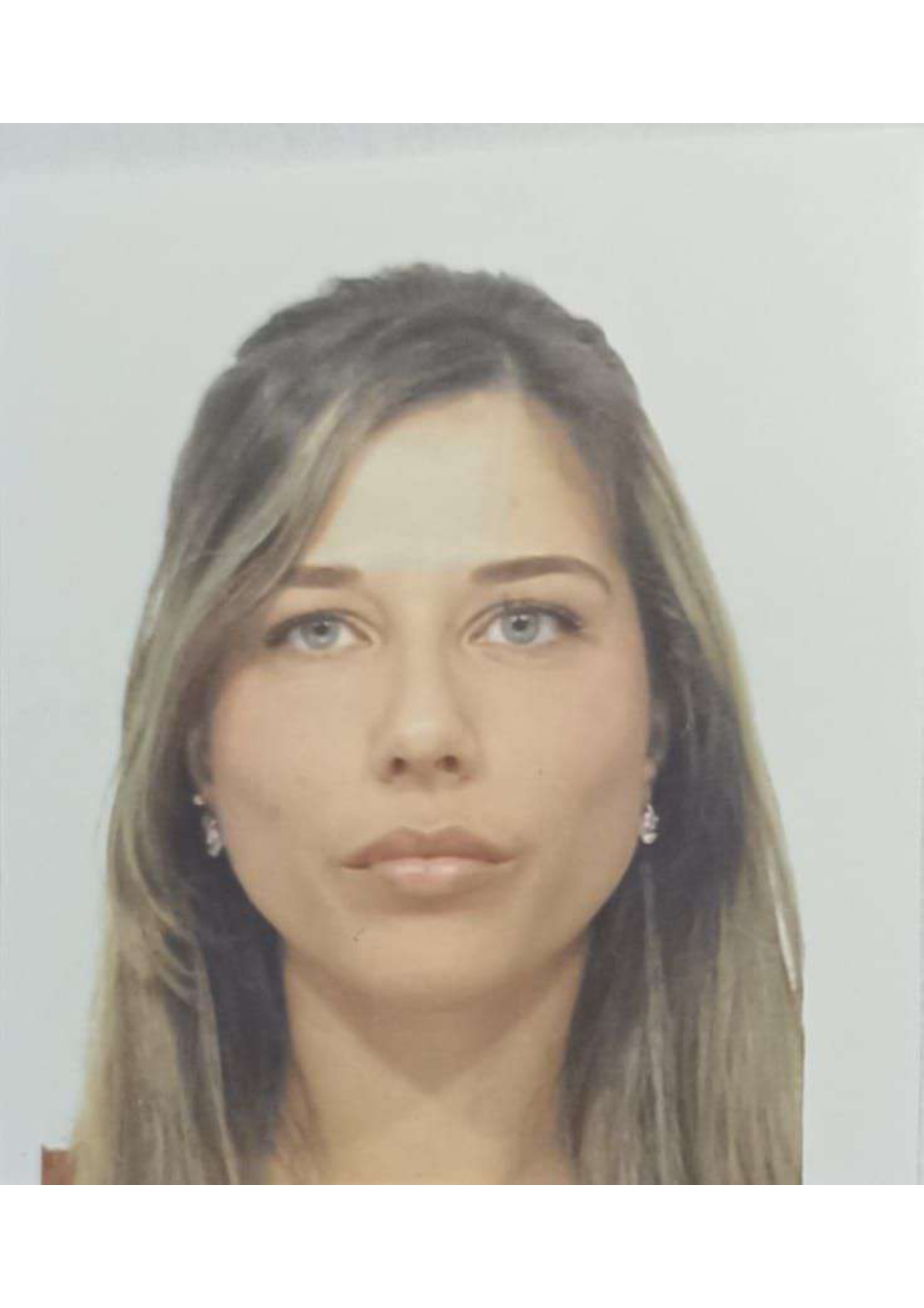
Research fellow
Stazione Zoologica Anton Dohrn
Sicily Marine Centre
Villa Pace - C.da Porticatello 29, 98167 Messina – Italia
Tel: +39 3486256952
E-mail: This email address is being protected from spambots. You need JavaScript enabled to view it.
Supervisor: dott.ssa Teresa Romeo
Research Interests
My research focuses on the design and development of citizen science protocols aimed at monitoring and evaluating the effectiveness of conservation and management measures adopted in marine protected areas, with particular reference to the Marine Protected Area of Capo Milazzo. This work is based on continuous dialogue with the local territory and its communities, encouraging the active involvement of citizens, local stakeholders, and educational institutions in processes of scientific observation and data collection. Such participation is further enhanced through the use of digital technologies and innovative communication tools, which support both data gathering and the dissemination of research outcomes.
The approach adopted integrates scientific research with public participation, thereby expanding the knowledge base that supports the protection of marine biodiversity and fostering greater collective awareness of environmental issues and the sustainability of marine ecosystems. Overall, the activities carried out are characterized by a structured and interdisciplinary approach, combining organizational and management aspects with communication and science outreach skills, and contributing to the operational coordination and implementation of the initiatives envisaged by the project.
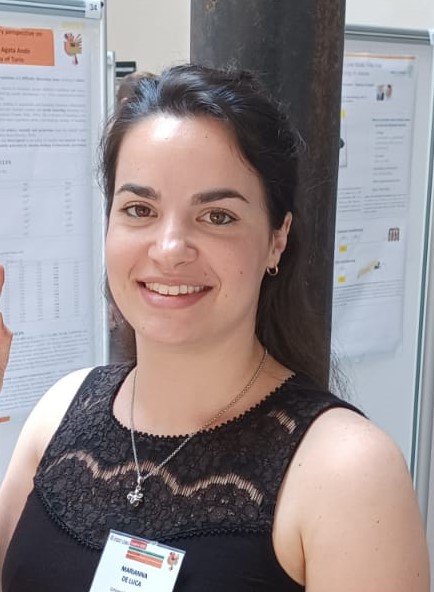 Post-Doc Fellow
Department of Biology and Evolution of Marine
E-mail: This email address is being protected from spambots. You need JavaScript enabled to view it.
Phone: +39 3284360920
ORCID: 0009-0004-4451-3534
Supervisor: Giovanna Ponte
Project: “Cell-cultured octopus production through sustainable marine biomass valorization – SEANERGIES”
ERC sectors: Comparative physiology (LS4_2), Neural networks and plasticity (LS5_5)
Settori scientifico-disciplinari: Fisiologia (BIO/09), Anatomia comparata e citologia (BIO/06)
Research Interests
My work at the Stazione Zoologica has mainly focused on experiments aimed at highlighting the physiological responses to visual, mechanical, and electrical stimulation in the cephalopod mollusk Octopus vulgaris, using neurophysiological techniques to assess its biological plasticity. In particular, during my PhD project I concentrated on neural dynamics based on electroencephalographic (EEG) recordings, developing minimally invasive methods to record brain signals (EEG-like) of neuronal activity in living animals, without requiring any surgical intervention. Neurophysiological techniques made it possible to detect the general characteristics of neural traces from different brain regions of the octopus. This approach aims to investigate the physiological and biological mechanisms underlying neural plasticity in this marine organism.
Currently, my research activity is carried out within the framework of the “SEANERGIES” project, with the goal of conducting innovative experiments related to the evaluation of the physiological response of nerve and muscle cells (including organotypic cultures) of Octopus vulgaris, and to the study of responses under stress conditions induced by different stressors, in order to enable a more accurate characterization of the cell types under investigation. The data resulting from this research will be essential for studying neural and neuromuscular dynamics related to biological plasticity and the stress response.
Comunità epimegabentoniche: Studio delle comunità epimegabentoniche sottoposte a perturbazioni fisiche
Duration: 22/11/2024 – 30/11/2026
SZN Principal Investigator: Maria Cristina Mangano
Within the framework of the implementing agreement for the Marine Strategy (Directive 2008/56/EC), the ISPRA Convention Technical Annex D6-03 governs the scientific collaboration between ISPRA and the Anton Dohrn Zoological Station (SZN) for the 'Study of epimegabenthic communities subjected to physical disturbance'. The central objective is the monitoring and assessment of sea-floor integrity (Descriptor 6), with a specific focus on the impact that fishing activities exert on these vulnerable benthic communities.
Objectives
The project is developed in three operational phases:
'Methodological Development': This phase sees SZN engaged in a National Expert Working Group. Key activities include: the definition of standardized methodological protocols to investigate communities subjected to fishing disturbances; the organization of two technical-scientific meetings to develop such methods; and a final meeting to illustrate the results of the standardization.
'Sea Campaigns and Analysis': This is the operational core of the project. SZN will organize and execute 5 sea campaigns in the Tyrrhenian Sea. Specific activities include: logistical planning and sampling according to the protocols defined in Phase A; sample analysis (both on board and in the laboratory) and verification of quality standards; and joint analysis of the collected data between SZN and ISPRA.
'Reporting and Final Synthesis': The last phase is dedicated to drafting a comprehensive technical-scientific report that gathers all the results covered by the agreement and the experimental activities.


Copyright © 2015 by Stazione Zoologica Anton Dohrn Napoli - Italy
Villa Comunale, 80121 Napoli - Tel.+39 081 5833111 - C.F./P.IVA : IT 04894530635 - PEC: ufficio.protocollo(at)cert.szn.it