





 Researcher
Biology and Evolution of Marine Organisms Department
Tel.: +39 081 5833322
e-mail: eva.terzibasi(at)szn.it
Google scholar: https://scholar.google.com/citations?user=cpkslV4AAAAJ&hl=en
Settori ERC:
- LS4, Physiology in Health, Disease and Ageing
- LS8, Evolutionary, Population and Environmental Biology
Settori Scientifico-Disciplinari:
- BIO/09 – Fisiologia
- BIO/06 – Anatomia comparata e citologia
Research Interests
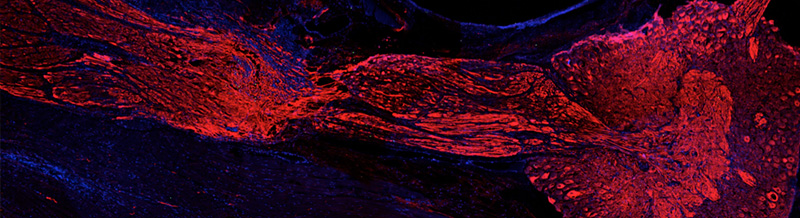
I obtained a degree in Marine Biology and developed my research activity during my PhD and postdoctoral training in the field of neurobiology, using as a model organism the short-lived aquatic vertebrate Nothobranchius furzeri. My studies have focused on the mechanisms of aging, neurodegeneration, adult neurogenesis, and circadian rhythms.
My research lies within the field of vertebrate neurobiology from an evolutionary and eco-physiological perspective, with particular emphasis on the adaptation of the nervous system to environmental changes. The main research lines include:
1. Organization and plasticity of the nervous system in basal marine vertebrates
Comparative studies on the organization of the central nervous system (CNS) in basal chordate species, with a focus on neuroanatomy and the distribution of neurogenic niches.
2. Molecular evolution of neurotrophins
Analysis of the evolution and expression of neurotrophins and their receptors in key species, such as Petromyzon marinus and Scyliorhinus canicula, to elucidate the evolutionary mechanisms underlying neuronal regulation in vertebrates.
3. Mechanisms of aging and extreme longevity
Comparative approaches between short- and long-lived model organisms to identify the biological processes underlying aging. In particular, the Greenland shark, Somniosus microcephalus, represents a unique model of extreme longevity (exceeding 270 years), complementary to the short-lived model Nothobranchius furzeri. This comparative framework—implemented through integrated experimental approaches including omics, molecular biology, and histology—enables the investigation of the physiological and molecular mechanisms supporting long-term survival, with particular attention to the role of the nervous system, including adult neurogenesis and resistance to neurodegeneration.
4. Effects of marine-derived neuroactive compounds on the nervous system
Investigation of the impact of bioactive compounds produced by marine species, including invasive taxa such as Caulerpa (e.g., caulerpin), on the nervous system. Analyses are conducted both during development, using embryos of Scyliorhinus canicula, and during aging, through organotypic brain culture models derived from Nothobranchius furzeri.
Overall, my research aims to elucidate the evolutionary and functional mechanisms regulating the nervous system in marine vertebrates, with implications for understanding adaptation, aging, and the health of organisms and ecosystems.
Selected Publications
- Elena Chiavacci, Kirstine Fleng Steffensen, Pierre Delaroche, Emanuele Astoricchio, Amalie Bech Poulsen, Daniel Brayson, Fulvio Garibaldi, Luca Lanteri, Christian Pinali, Giovanni Roppo Valente, Federico Vignati, John Fleng Steffensen, Holly Shiels, Eva Terzibasi Tozzini, Alessandro Cellerino. Resilience to cardiac aging in Greenland shark Somniosus microcephalus (Aging Cell, accepted 20/03/2026: under publication; already published in BiorXiv, doi: https://doi.org/10.64898/2025.12.20.695706 )
- Di Fraia D, Marino A, Lee JH, Kelmer Sacramento E, Baumgart M, Bagnoli S, Balla T, Schalk F, Kamrad S, Guan R, Caterino C, Giannuzzi C, Tomaz da Silva P, Sahu AK, Gut H, Siano G, Tiessen M, Terzibasi-Tozzini E, Fornasiero EF, Gagneur J, Englert C, Patil KR, Correia-Melo C, Nedialkova DD, Frydman J, Cellerino A, Ori A. Altered translation elongation contributes to key hallmarks of aging in the killifish brain. Science. 2025 Jul 31;389(6759):eadk3079. doi: 10.1126/science.adk3079. Epub 2025 Jul 31. PMID: 40743332.
- Chiavacci E, Camera R, Costa M, Fronte B, Tozzini ET, Cellerino A. Nerve Growth Factor Receptor (NGFR/p75NTR) of the Small-Spotted Catshark (Scyliorhinus canicula): Evolutionary Conservation and Brain Function. J Comp Neurol. 2025 Apr;533(4):e70049. doi: 10.1002/cne.70049. PMID: 40220269; PMCID: PMC11993139.
- Louka A, Bagnoli S, Rupert J, Esapa B, Tartaglia GG, Cellerino A, Pastore A, Terzibasi Tozzini E. New lessons on TDP-43 from old N. furzeri killifish. Aging Cell. 2021 Dec 23:e13517. doi: 10.1111/acel.13517. Epub ahead of print. PMID: 34939315.
- Tozzini ET, Baumgart M, Battistoni G, Cellerino A. Adult neurogenesis in the short-lived teleost Nothobranchius furzeri: localization of neurogenic niches, molecular characterization and effects of aging. Aging Cell. 2012 Apr;11(2):241-51. doi: 10.1111/j.1474-9726.2011.00781.x. Epub 2012 Jan 13. PubMed PMID: 22171971; PubMed Central PMCID: PMC3437507.


