

 NewsNewsDepartment Seminar - EMERTOX: New developments in electrochemical methods for the detection of toxic algae
News
In 1898, Camillo Golgi described the intracellular structure that later took his name, the Golgi apparatus, which we now know to be involved in the transport and modification of proteins destined for secretion. The Golgi apparatus can be formed by single or multiple units; the latter can remain independent or connect to each other in a centralized structure called the Golgi 'ribbon'. The ribbon is generally considered an organization of the Golgi apparatus exclusively present in the cells of vertebrate animals. The reason why the Golgi ribbon has evolved, and its biological functions are not clear. However, in various pathologies, including neurodegenerative diseases, this organization of the Golgi apparatus is lost, indicating its importance for cellular physiology.
Working on cellular secretion, first at UConn Health in the United States and later at University College London in the United Kingdom, Dr. Ferraro has long been fascinated by the Golgi ribbon, hypothesizing that its functions can be deciphered through a comparative biology approach, from an evolutionary perspective. Back in Italy, at the Anton Dorhn Zoological Station, Dr. Ferraro focused his interests on the Golgi ribbon, conducting a study involving numerous colleagues from the Neapolitan institute and research centers in France, Spain, Germany, the United Kingdom, Norway, and the United States (*). The study, recently published in the journal Cell Reports, discovered that far from being exclusive to vertebrates, the Golgi ribbon is present in the cells of many taxonomic groups of animals. These observations indicate that this structure of the Golgi apparatus appeared early in the evolutionary history of animals, before their diversification into the groups existing today. The study also revealed that this structure, initially absent, forms during embryonic development in the sea urchin, ascidian, and amphioxus. This observation suggests the possibility that the Golgi ribbon has a function in embryonic development and that perhaps this is the ancestral role for which it evolved.
By revealing the unexpected and widespread presence of the Golgi ribbon among animals, the study, which relied on interdisciplinary collaboration of zoologists, cellular biologists, evolutionary biologists, and developmental biologists, brings the attention of the scientific community to this enigmatic structure and the importance of deciphering its functions. Future studies in this direction will allow for a better understanding of the role of the Golgi ribbon in the evolution of animal cells and in their physiology, and the consequences of its loss on the course of neurodegenerative diseases and other pathologies.

A morphological investigation of the Golgi apparatus in present-day species allowed the identification of the origin of the Golgi ribbon during the evolutionary history of animals in the common ancestor of cnidarians (jellyfish and corals) and bilaterians (all animals with bilateral symmetry).

The images show a sea urchin embryo (Paracentrotus lividus) labeled with fluorescent reporters of the Golgi apparatus (green) and the plasma membrane (magenta). It can be observed how the Golgi apparatus, initially present as separate elements in embryonic cells, becomes a single structure, the Golgi ribbon. Times elapsed since fertilization are indicated.
Ream more:
(*) In addition to Francesco Ferraro, the researchers involved in the study were Giovanna Benvenuto, Serena Leone, Emanuele Astoricchio, Enrico D’Aniello, Salvatore D’Aniello, and Ina Arnone from the Anton Dohrn Zoological Station; Sophia Bormke, Jack Ullrich-Lüter, and Carsten Lüter from the Museum of Natural History in Berlin, Germany; Sanja Jasek and Gáspár Jékely from the Living Systems Institute at the University of Exeter in the United Kingdom; Maike Kittelmann from the Department of Biological and Medical Sciences at Oxford Brookes University in the United Kingdom; Kent McDonald from the University of California Berkeley in the United States; Volker Hartenstein from the Department of Molecular, Cell, and Developmental Biology at the University of California Los Angeles in the United States; Valentina Baena from the Department of Cell Biology at UConn Health in Farmington, United States; Héctor Escrivà and Stephanie Bertrand from the Institute of Integrative Biology of Marine Organisms at the Sorbonne University and CNRS in France; Bernd Schierwater from the Institute of Ecology and Evolution at the Hannover University of Veterinary Medicine Foundation in Germany; Pawel Burkhardt from the Michael Sars Centre at the University of Bergen in Norway; Iñaki Ruiz-Trillo from the Institute of Evolutionary Biology at Pompeu Fabra University in Barcelona, Spain. February 29, 2024 DOI:https://doi.org/10.1016/j.celrep.2024.113791

| An expedition to study coastal ecosystems and their response to the environment, from molecules to communities | With LINK (Traversing European coastlines), we embark on a journey through European coastlines to explore the biodiversity and molecular adaptability of microbial communities as well as key selected organisms. We focus on coastal habitats as they are the richest in species biodiversity and they also often present the highest levels of pollution. |
 |
|
|
A new era of coastal ecosystems exploration TREC multinational core partners are the European Molecular Biology Laboratory (EMBL), Tara Ocean Foundation and European Marine Biological Resource Centre (EMBRC-ERIC). In Naples, one of the super-sites of the expedition, the Stazione Zoologica Anton Dohrn (SZN) acts as a local hosts, and develops activities in collaboration with NBFC. |
Save the dates and join us! Download the program
Games, guided tours, exhibitions, amusing workshops, are waiting for you
All activities are FREE of CHARGE
SZN organised various Public Engagement activities in cooperation with EMBL and TARA Foundation.
AML (Advanced Mobile Lab)guided tours o - A look inside the TREC's mobile laboratory
Target group: 12 to 99 years old
What: interactive guided tour offering participants the opportunity to explore the Advanced Mobile Lab directly. During the visit, state-of-the-art AML equipment will be showcased, and participants will have the chance to observe some mini-experiments up close.
Where: AML, seaside of the main SZN building.
When: May 11, 3:00 PM – 8:00 PM
MANDATORY RESERVATION HERE
TARA at Molo San Vincenzo
Three activities will take place near the TARA schooner:
Where: Molo San Vincenzo (Marina Militare).
When: May 11, 10:00 AM - 1:00 PM and 3:00 PM - 8:00 PM
ATTENTION!! LIMITED ACCESS WITH MANDATORY FREE RESERVATION TO ACCESS THE PIER AT THE FOLLOWING LINK
• Guided tours on TARA - Discovering TARA
Target group: 8 to 99 years old
What: An interactive guided tour offering participants the opportunity to explore the Goletta TARA up close, understanding what it is, what it does, and what life and work are like on board.
• Observing the invisible inhabitants of the ocean - Hands-on workshop with a portable microscope
Target group: 8 to 99 years old
What: An experience to discover an essential world for life on Earth, the marine microbiome, by observing local seawater samples with the Curiosity microscope, understanding the importance of the marine microbiome, and why it needs to be studied for better protection.
• Plastic in the sea, solutions are on land - Interactive play-information about plastic pollution
Target group: 8 to 99 years old
What: A workshop based on games to trace the source of plastic pollution and associated chemical pollutants and find solutions. Observe plastic in its various forms, breake downpreconceived ideas, and discover your power to make a difference.
Trec in the City – Science and fun around Naples
Three engaging activities that will pique your curiosity and provide entertainment, don't miss the opportunity!
Where and When:
Piazza Municipio, May 4, from 15:00 to 19:00
Città della Scienza, May 5, from 09:00 to 17:00
Mostra D'Oltremare, May 7, from 16:00 to 19:00
Rotonda Diaz, May 8, from 16:00 to 19:00
Mostra D'Oltremare, May 9, from 16:00 to 19:00
Rotonda Diaz, May 10, from 16:00 to 19:00
Piazza Municipio, May 11, from 15:00 to 19:00
Mostra D'Oltremare, May 12, from 15:00 - 19:00
• Curiosity hand-held microscope
Target group: 6 to 99 years old
What: Have you always wanted to use a microscope? Come and visit us and you'll discover the invisible! This traveling exhibition stand offers practical experiences and "wow-science!" on microscopy. Thanks to a portable microscope, you will see real samples from the TREC expedition, thus observing plankton in a unique and fun way!
• Run, Scientist, Run! - Scientific Goose Game
Target group: 4 to 99 years old
What: Come and play a giant goose game to discover the secrets of a scientific expedition! You will experience the challenges and successes of sampling for a scientific expedition.
N.B The game "Run, Scientist, Run" will be held at all locations except for Piazza Municipio.
• The Ocean, this Unknown - Exhibition
Target group: 8 to 99 years old
What: An exhibition, conceived as a journey, composed of 6 illustrated panels to convey a key message: the Ocean is the central ecosystem of our planet.
Nexus Island
Target group:12 to 99 years old
What: An interactive, game-based workshop focused on the health of the planet. Just like a scientist, you will take part in an expedition to discover, collect, and study the organisms of the coastal areas of an island... will you be able to save it?
Where: Città della Scienza
When: May 5, 9:00 AM - 5:00 PM
Science without Frontiers - round table on TREC with live illustrations
Target group: 18 years old and above
What: On the occasion of Europe Day, the Tara Ocean Foundation and the Institut Français Napoli invite you to a roundtable discussion on TREC, an expedition that transcends geographical, disciplinary, and ecosystem boundaries. The roundtable features Douglas Couet, marine biologist from CNRS, France; Iole di Capua, marine biologist from SZN, Italy; Anne-Marie Alleaume, professional communicator from the Tara Ocean Foundation, France. The discussion will be illustrated in real-time by the Belgian artist François Olislaeger.
Where: Institut Français Napoli (via Francesco Crispi 86).
When: May 9, at 6:00 PM
Science in Travel - Scientific Conversations with and for the Public
Target group: 18 years old and over
What: Join us for a fun, informal, and accessible evening where scientists from across Europe come together to discuss with you! A sharing moment during which the TREC project - and science in general - is discussed with the public. Scientists, including those from SZN, take the "stage" and present various topics related to the marine world and the Trec-TARA expedition.
Where: Lo Spark Café di Napoli (Piazza Bovio, 33).
When: May 10, at 6:00 PM
PlanktoQuest - Virtual Reality Experience on Plankton
MANDATORY RESERVATION HERE
Target group: 8 to 99 years old
What: Plankton as you've never seen it: immerse yourself in an augmented reality experience that will allow you to "touch" the invisible! PlanktoQuest is a virtual reality animation that allows the user to explore and manipulate marine plankton with their hands. The user can stretch, section, feed different plankton organisms and enter inside them with only hands and a headset (no computer, no controller).
Where: Stazione Zoologica Anton Dohrn
When: May 11, 9:00 AM – 4:30 PM and May 12, 9:00 AM - 12:30 PM
 |
 |
 |
 |
 |
 A new parasite species for science has been described from Munda round ray (Urotrygon munda) from the Pacific coast of the Costa Rica, making it the first known parasite from this rare ray. The new species, Anaporrhutum mundae (Trematoda) has been discovered by a team of Italian (Stazione Zoologica Anton Dohrn) and Costa Rican scientists (Universidad de Costa Rica and Instituto Costarricense de Pesca y Acuicultura) led by Dr. Mario Santoro and Dr. Alberto Solano-Barquero. The study has been published in the Journal of Helminthology (https://doi.org/10.1017/S0022149X2400018X) in the frame of an ambitious international project that aims to document marine fish parasite diversity in the Costa Rican waters. Costa Rica has impressive levels of marine biodiversity, including numerous endemic taxa. Dr. Mario Santoro ensures that ongoing research and exploration in this country's marine ecosystems will uncover many more ever seen “surprises” within the local fish fauna.
A team from the Stazione Zoologica Anton Dohrn, led by researcher Ulisse Cardini from the Department of Integrative Marine Ecology, has published a new scientific study exploring the role of symbioses between marine plants and their microscopic partners, and how ocean acidification affects their nutrition
 Seagrass beds are biodiversity-rich ecosystems, similar to underwater gardens, that are vital to the life of the oceans and marine creatures. However, they are now facing a growing threat: ocean acidification. This is caused by the excessive dissolution of carbon dioxide, which is mainly produced by human activities.
To better understand the impact of such acidification on the nutrition of marine plants, an innovative study has focused on the Mediterranean seagrass Posidonia oceanica and the role of its microscopic symbionts. Scientists used carbon dioxide emissions from volcanic activity near the island of Ischia, Italy, to study this plant and its symbionts under acidic conditions not far from those predicted for the future of the oceans.
Dr Ulisse Cardini from the Stazione Zoologica Anton Dohrn at the Genoa Marine Centre led this important work in collaboration with researchers from the University of Bremen in Germany, the Institute for Biological Resources and Marine Biotechnology - CNR Ancona, the University of Aarhus in Denmark, and the University of Southern Bohemia in the Czech Republic.
The researchers made a surprising discovery: despite the rising acidity levels, Posidonia meadows demonstrate remarkable resilience in the nitrogen cycle, which is crucial for their growth. The leaves of these seagrasses have become highly effective powerhouses for nitrogen transformation, involving a wide range of symbiotic microorganisms, including bacteria and archaea.
Even more interesting, comments Dr Ulisse Cardini, was the observation that, despite the increasing acidity, these microorganisms not only remain active but also accelerate many crucial processes. Marine plants benefit from the increase in carbon dioxide for photosynthesis and sugar production, while the microorganisms promote protein synthesis through increased nitrogen acquisition.
However, Dr Cardini further explains, this nutritional advantage is not without risk, as it can increase the risk of predation by herbivores and other organisms. This delicate balance highlights the importance of studying the processes that regulate the health and resilience of marine ecosystems in detail.
In conclusion, this study offers valuable insights into how marine plants and their microbes adapt to ocean acidification. It highlights the significance of safeguarding these ecosystems, which are vital for mitigating climate change and conserving ocean life for future generations.
Team Stazione Zoologica Anton Dohrn
Ulisse Cardini (EMI), Johanna Berlinghof (EMI e Università di Brema), Luis Montilla (EMI), Friederike Peiffer (EMI), Ugo Marzocchi (EMI e Università di Aarhus), Francesca Margiotta (RIMAR), Maria Abagnale (RIMAR)
Original publication
Johanna Berlinghof, Luis M. Montilla, Friederike Peiffer, Grazia M. Quero, Ugo Marzocchi, Travis B. Meador, Francesca Margiotta, Maria Abagnale, Christian Wild & Ulisse Cardini. Accelerated nitrogen cycling on Mediterranean seagrass leaves at volcanic CO2 vents. Communications Biology 7, 341 (2024). https://doi.org/10.1038/s42003-024-06011-0
Project funding
This research was supported by a Ph.D. fellowship co-funded by the Stazione Zoologica Anton Dohrn (SZN) and the University of Bremen (to J.B. and F.P.), a Ph.D. fellowship funded by the Open University – SZN Ph.D. Program (to L.M.M.), and a SZN postdoctoral fellowship (to U.M.). U.C. was partially supported by the Italian PRIN 2022 project ENGAGE (grant n. 20223R4FJK) and PRIN 2022 PNRR project BORIS (grant n. P2022R739J), funded by the European Union – Next Generation EU.


NEW DEADLINE - January 15, 2024
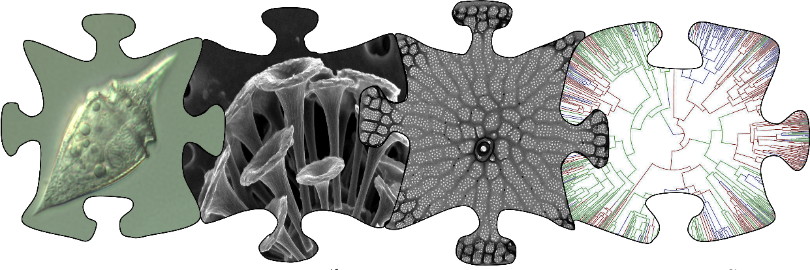
13th Advanced Phytoplankton Course - APC13
Identification, Taxonomy, Systematics
Stazione Zoologica Anton Dohrn, Naples, Italy, 6-26 October 2024
Call for PhD students n. 3/2023 (new Publishing)
N. 1 Ph.D. fellowship is available to carry out interdisciplinary training in Biological Sciences at the Stazione Zoologica Anton Dohrn in Naples (Italy).
Applications are invited from suitably qualified postgraduate candidates.
The closing date for applications is November 6th 2023 h. 12.00
Published on october 20, 2023


Copyright © 2015 by Stazione Zoologica Anton Dohrn Napoli - Italy
Villa Comunale, 80121 Napoli - Tel.+39 081 5833111 - C.F./P.IVA : IT 04894530635 - PEC: ufficio.protocollo(at)cert.szn.it