


 NewsNewsInternal Seminar - The biology and evolution of the cephalopod digestive tract: A neglected topic in cephalopod research
Pages
Recreational fishing: characterization and assessment of the extent of recreational fishing in Italian seas and its impact on biodiversity and fishery resources
Duration: 22/11/2024 – 30/11/2026
SZN Principal Investigator: Pietro Battaglia
Introduction
Recreational fishing is a widespread activity that represents a form of leisure and entertainment during free time, with deep social roots and millions of people around the world. Although this activity plays an important economic role in terms of related industries, it has an impact on marine biodiversity and competes with professional fishing, given the possible interaction with commercially exploited resources. The implementation of 2008/56/EC Directive (Marine Strategy) in Italian waters has laid the foundations for understanding and assessing the impact of recreational fishing on fish stocks, aiming to fill the information gap regarding this sector. In fact, among the environmental targets set by Italy for Descriptor 3, the T3.3 aims at developing a new regulation on recreational fishing in national waters. For this purpose, a program to monitor recreational fishing in various Italian regions was launched in 2020 (with subsequent three-year data collection cycles), involving collaboration between several scientific institutes/organizations (including ISPRA, which is the lead partner) to draw up a methodological monitoring protocol and collect data useful for an initial assessment of the impacts. As part of this activity, the Anton Dohrn Zoological Station is responsible for data collection in the Sicily, Calabria, Basilicata, and Campania regions. Information is collected through telephone surveys and direct observations at fishing hotspots regarding fishing types and techniques, number of trips, fishing areas, species composition, catch abundance, target species size structure, seasonality, and socio-economic data. The involvement and active participation of recreational fishermen in data collection also provide information about their perceptions of the state of fish stocks and general issues related to fishing. Monitoring provides the essential knowledge baseline for developing management guidelines and strategies.
Objectives
The monitoring program has the following objectives:
- characterize and quantify the phenomenon of recreational fishing in Italian seas;
- assess the impact of recreational fishing on fish resources and biodiversity;
- evaluate the socio-economic aspects of this sector;
- contribute to achieving the Italian environmental target T3.3 of the Marine Strategy, consolidating methodological, analytical approaches, and knowledge to improve threshold determination for GES assessment;
- provide new data in addition to those already collected for and funded under The National Work Program for the Collection of Fisheries Data (PLNRDA), which was developed within the context of EUMAP by MASAF.


Integrated spatial planning across realms for biodiversity conservation and human development in a context of change

Programme: Biodiversa+
Duration: 01/04/2023 – 31/03/2027
Despite robust EU legislation, biodiversity loss at a continental scale continues at a worrying pace, highlighting the need for more effective and integrated planning. In this context, the INSPIRE project was launched to overcome the fragmentation of conservation policies. The initiative proposes a revolutionary approach that connects terrestrial, freshwater, and marine realms, integrating nature protection with socio-economic activities to meet the ambitious targets of the EU Biodiversity Strategy for 2030.
Main objectives
The project aims to develop an innovative decision-support framework to optimize management efforts in ever-changing climatic and social scenarios. The central purpose is to harmonize biodiversity conservation with the sustainable use of land and sea, balancing ecological needs with human development requirements.
To achieve these goals, INSPIRE is organized around the following lines of action:
- Cross-Realm Integration: creation of a decision-making model that simultaneously considers terrestrial, freshwater, and marine ecosystems, moving beyond traditional physical and management boundaries;
- Socio-Economic Reconciliation: integrating conservation into key human activities (agriculture, fisheries, energy production), identifying synergies and managing trade-offs among diverse objectives;
- Planning Beyond Protected Areas: defining coherent and well-connected ecological networks, seeking biodiversity protection opportunities even outside the borders of traditional parks and reserves;
- Proactive Management Strategies: development of dynamic and resilient action plans capable of adapting to global environmental and climate changes;
- Knowledge Co-generation: direct engagement of policymakers and stakeholders through a transdisciplinary approach, ensuring that project results serve as effective operational tools for national and European governance.
Website: https://www.inspire-biodiversa.com/ ; https://www.biodiversa.eu/2023/04/19/inspire/
Coordinator: Department of Plant Biology and Ecology, University of Sevilla, Spain
SZN Principal Investigator: Sylvaine Giakoumi

Partner:
- Biodiversity and Natural Resources Programme – Biodiversity Ecology and Conservation Group, International Institute for Applied System Analysis, Austria
- Department of Biodiversity and Nature Conservation, Environmental Agency Austria, Austria
- Department of Marine Sciences, Laboratory of Marine Biodiversity and Ecosystems Management, Università dell’Egeo, Grecia
- Dipartimento di Ecologia Marina Integrata, Stazione Zoologica Anton Dohrn, Italia
- Research Center in Biodiversity and Genetic Resources, BIOPOLIS, Portogallo
- Centre for Development and Environment, Università di Berna, Svizzera
- School of Science Engineering and Environment, Università di Salford, Regno Unito

Coordinated and adaptive monitoring of biodiversity change across Mediterranean rocky ecosystems
Programme: Biodiversa+
Duration: 01/03/2024 – 28/02/2027
 Rocky reefs are a hotspot of Mediterranean marine biodiversity. At the same time, these ecosystems are highly impacted by multiple human activities and global change. The Mediterranean Sea has already suffered from rapidly increasing overexploitation and mass mortalities due to heatwaves. Such biodiversity shifts have affected ecosystem functioning and compromised conservation efforts. Long-term data are essential for evaluating ecosystem responses to disturbances (including global changes), providing baselines to evaluate change, and assessing the effectiveness of management measures in securing ecosystem structure, function, and services provision. In CAMBioMed, we will develop an adaptive monitoring framework together with stakeholders, propose a novel toolkit for efficiently monitoring Mediterranean rocky ecosystems, and enable decision-makers to answer critical questions about the conservation of changing marine rocky ecosystems.
Main objectives
CAMBioMed aims to:
- harmonise and improve monitoring designs, capitalising on the partners’ long experience in national monitoring programs and the use of innovative tools (e.g. eDNA metabarcoding, satellite remote sensing, and artificial intelligence) for monitoring rocky reefs across the Mediterranean Sea;
- improve our knowledge on the response of Mediterranean marine ecosystems to global and local stressors, by conducting extensive fieldwork and integrating an unprecedented volume of historical and new data;
- provide a roadmap and practical guidelines for adaptive monitoring that incorporates social perceptions and values to contribute to the effective conservation of rocky reef ecosystems in the Mediterranean Sea, with a view to help and fulfil the objectives of the Biodiversity Strategy for 2030 and secure human wellbeing.
Main activities
CAMBioMed is a transdisciplinary project combining natural sciences (marine biology & ecology), technological sciences (computer sciences & engineering), and social sciences (social anthropology & environmental economics). The main activities are to develop an adaptive monitoring framework for Mediterranean rocky reefs and track large-scale and long-term ecosystem changes along environmental gradients; support upscaling of monitoring using innovative tools, such as drones, computer vision, and e-DNA metabarcoding; and promote the monitoring of biodiversity and ecosystem changes with citizen science and anthropological assessment of social, economic, and cultural contexts. CAMBioMed will co-develop the research activities by consulting stakeholders at different levels, from high-level policy stakeholders (e.g., national ministries) to case study stakeholders (e.g., local fishers) and the general population by means of interviews, focus groups, and/or workshops. This engagement is built upon ongoing stakeholder interactions with partners in existing projects and citizen science initiatives that CAMBioMed will upscale to design and develop the adaptive, relevant, and useful monitoring framework. CAMBioMed will provide a more comprehensive assessment of ecosystem health, allowing for the monitoring program to evolve in response to changing conditions, and for decision-makers to answer critical questions related to biodiversity conservation in a changing Mediterranean Sea.
Website: https://cambiomed-biodiversa.com/; https://www.biodiversa.eu/2024/04/15/cambiomed/
Coordinator: Stazione Zoologica Anton Dohrn, Sicily Marine Centre
SZN Principal Investigator: Sylvaine Giakoumi

Partner:
- Department of Marine Sciences, Università dell’Egeo, Grecia
- Department of Social Anthropology, Università di Stoccolma, Svezia
- Department of Marine Ecology, Consejo Superior de Investigaciones Científicas, Spagna
- Department of Biology, Università di Pisa, Italia
- Department of Intelligent Systems, Delft University of Technology, Olanda
- Future Oceans Lab, Università di Vigo, Spagna
- Self-financed partner A: Department of Marine Biology, Oceanographic and Limnological Research, Israele
- Self-financed partner B: Centre for Marine Research, Ruder Boskovic Institute, Croazia

PROMoting Elasmobranchs conservation THrough by-catch reduction, Ecotourism and alternative sUStainable fisheries
Programme: Programme for Environment and Climate Action (LIFE)
Duration: 11/07/2024 – 30/09/2029
The Mediterranean Sea is a biodiversity hotspot for elasmobranchs (sharks and rays), yet it is also one of the regions where these species face the highest risk of extinction due to overfishing and habitat fragmentation. In this context, the LIFE PROMETHEUS project was launched as a transnational initiative involving Italy, Spain, France, Cyprus, and Greece and promoting conservation initiatives in 12 Mediterranean areas. The project aims to reverse the decline of threatened species by promoting a management model that integrates protection with the economic sustainability of coastal communities.
Objectives
The project aims to improve the conservation status of 15 elasmobranch species through a multidisciplinary approach involving fishers, tourism operators, and consumers. The central purpose is to reduce the impact of human activities on these apex predators, which are vital for the balance of marine ecosystems.
To achieve these goals, LIFE PROMETHEUS is organized around the following lines of action:
- Bycatch Reduction: implementation of innovative technologies, such as electro-magnetic deterrents, to minimize the accidental capture of sharks and rays in nets and longlines;
- Promotion of Alternative Fisheries: supporting fishers in shifting towards the harvest of Invasive Alien Species (such as the blue crab or lionfish), thereby reducing pressure on threatened elasmobranch species;
- Sustainable Marine Ecotourism: development of Codes of Conduct for responsible diving tourism and promotion of sustainable shark and ray watching in their natural habitats;
- Awareness and Market Growth: launching campaigns for conscious seafood consumption and creating a "shark-free" eco-label to involve the supply chain and consumers in biodiversity protection;
- Dissemination and Policy: active engagement of stakeholders and dialogue with national and European authorities to support increasingly responsible fishery management policies.
Website: https://www.life-prometheus.eu/it/elementor-8218/
Coordinator: Università Politecnica delle Marche – Italia
SZN Principal Investigator: Carlo Cattano
Partners:
- Stazione Zoologica Anton Dohrn (SZN) – Italy
- University of Genoa (UNIGE) – Italy
- University of Padua (UNIPD) – Italy
- University of the Balearic Islands (UIB) – Spain
- Marine and Environmental Research Lab (MER) – Cyprus
- Experimental Center for Habitat Protection (CESTHA) – Italy
- Spanish National Research Council (CSIC) – Spain
- Italian Institute for Environmental Protection and Research (ISPRA) – Italy
- Alma Mater Studiorum, University of Bologna (UNIBO) – Italy
- University of Palermo (UNIPA) – Italy
- WWF Italy
- University of Patras – Greece
- iSea – Greece
- COISPA Foundation – Italy
- Capo Testa Punta Falcone Marine Protected Area – Italy
- Pelagie Islands Marine Protected Area – Italy
- Egadi Islands Marine Protected Area – Italy
- Maritime Cooperative Society of Sète Fishermen (SCMPS) – France
- Net European Consulting srls – Italy
- National Federation of Fishing Enterprises (FEDERPESCA) – Italy


Cephalopod Integrated Analysis to identify the impact Of MARine Environmental pollution
Programme: Missione 4 - Istruzione e Ricerca - Bando PRIN 2022 PNRR - PRIN: PROGETTI DI RICERCA DI RILEVANTE INTERESSE NAZIONALE - Decreto Direttoriale n. 1409 del 14 settembre 2022 (PNRR - Piano Nazionale di Ripresa e Resilienza)
Duration: 24/11/2023 – 28/02/2026
Introduction
The CIAO MARE project investigates how the increasing impact of human activities in the Anthropocene is reshaping the state of marine health. Marine litter, chemical contaminants and the unsustainable exploitation of fishery resources are altering habitats and affecting the well being of marine organisms. In this context, Mediterranean cephalopods — molluscs with remarkable adaptive capacities and occupying diverse ecological niches — serve as ideal bioindicators for understanding the transformations underway. CIAO MARE adopts an integrated and multidisciplinary approach to study how plastics, microplastics and other contaminants influence the biology, physiology, ecology and tissue quality of cephalopods collected in two areas of the Tyrrhenian Sea characterised by different environmental conditions. The analyses combine morpho functional assessments, ecological studies, genetic investigations and chemical analytical approaches, exploring the entire pathway of contaminants: from ingestion to their possible accumulation in tissues, and the resulting consequences for organismal health and for resources intended for human consumption. CIAO MARE adopts an integrated and multidisciplinary approach that can support national and international strategies for monitoring marine biota and the marine environment. The results are providing a useful baseline for improving local fisheries management and the governance of marine protected areas. With its integrated and replicable vision, CIAO MARE positions itself as a pilot project for future investigations across the Mediterranean and other ocean regions, strengthening the dialogue between science, governance and local communities to support the sustainable protection of marine ecosystems.
Objectives
1. Analyse anthropogenic impacts, using Mediterranean cephalopods (Loligo vulgaris, Octopus vulgaris, Sepia officinalis) as bioindicators to assess the presence and effects of marine litter, chemical contaminants and microplastics.
2. Study, through morpho-functional, ecological, genetic and chemical analytical approaches, how plastics and contaminants affect the biology, physiology, ecology and tissue quality of commercially relevant marine species.
3. Understand organismal response mechanisms, including physiological and behavioural adaptations, changes in predatory strategies and the pathways of contaminant ingestion, accumulation and potential transfer to tissues.
4. Evaluate implications for food safety, investigating how plastic ingestion and the bioaccumulation of pollutants may influence the quality of seafood destined for human consumption.
5. Provide knowledge to support management and conservation strategies, contributing to improved fisheries governance, marine protected area management and the achievement of the objectives of the Marine Strategy Framework Directive.
6. Develop a replicable methodological model, applicable to future investigations in the Mediterranean and other oceanic contexts, fostering dialogue among the scientific community, governance bodies and local stakeholders.
Coordinator: Stazione Zoologica Anton Dohrn, Sicily Marine Centre
SZN Principal Investigator: Pietro Battaglia
Partners: Università degli Studi di Messina (UNIME), Università degli Studi “Mediterranea di Reggio Calabria (UNIRC)


Programme
Interreg VI-A Italy-France Maritime Programme 2021-2027
CUP
C33C24000960007
Project Lifetime
36 months (1st February 2025–31st January 2028)
Project Description
Small-scale fisheries (SSF) are a vital part of the cultural heritage, local economy and environmental sustainability of Mediterranean coastal communities. However, the sector faces major challenges, including fragmented businesses, limited economic resilience, weak links with other sectors and an ageing workforce.
The CORE project aims to strengthen the competitiveness and resilience of SSF across the Italy-France Maritime cooperation area by promoting cross-border collaboration among research organisations, public authorities and fisheries stakeholders. The project will develop shared approaches for SSF monitoring and management, support education and awareness-raising activities, and test innovative solutions to improve the sector's economic sustainability.
By promoting the principles of the sustainable blue economy, the CORE project will help increase the environmental, social and economic value of SSF in the north-western Mediterranean.
SZN Role
Genoa Marine Centre (GMC), territorial seat of the Stazione Zoologica Anton Dohrn (SZN), provides the scientific and technical support to the project. GMC-SZN contributes to the development of monitoring methodologies to improve the management of SSF, supports training and outreach activities, promotes the principles of sustainability and blue economy, and takes part in pilot actions focused on the sustainability of SSF and the monitoring of the marine environment. Through the CORE project, SZN aims to strengthen the role of small-scale fishers as socio-ecological sentinels. Thanks to their close connection with the sea, fishers can help raise public awareness of marine issues and reconnect lay people to the sea, support local economies and maritime traditions, and provide valuable insights into environmental and ecological changes.
Lead Partner
Genoa Chamber of Commerce (CCIAA Genova)
Project Partners
• Genoa Chamber of Commerce (Italy)
• Coldiretti Liguria (Italy)
• Stazione Zoologica Anton Dohrn - Genoa Marine Centre (Italy)
• Var County Council (France)
• Departmental Committee for Maritime Fisheries and Marine Farming of Alpes-Maritimes (France)
• Coldiretti Toscana (Italy)
• FLAG Nord Sardegna (Italy)
• French Biodiversity Office - Marine Natural Park of Cap Corse and Agriate (France)
SZN Principal Investigator
Paolo Guidetti
SZN team
Paolo Guidetti, Marta Giuga, Valerio Mattera
Total Project Budget: € 1,568,611.05
ERDF Contribution: € 1,254,888.82
SZN Budget: € 215,550.45
ERDF Contribution to SZN: € 172,440.36
Website https://interreg-marittimo.eu/it/web/core


From February 23rd to 26th 2027
Stazione Zoologica Anton Dohrn in the city of Naples (Italy)
Who can apply: PhD students, post-docs, and young researchers
Application deadline: December 10th 2026
SHORT DESCRIPTION
Micro- and nanoplastics pollution is a hot topic in scientific research and represent a growing concern for human health.
The course will offer the opportunity to investigate the alterations induced by their accumulation in marine organisms. Through the visit of wastewater treatment plant and sample collection and analysis, the participants will develop specialized expertise in the analysis and quantification of micro- and nanoplastics dispersion in aquatic environments. We will offer a comprehensive overview about their interaction with other pollutants, and their technical interference for desalination and water reuse. Finally, we will highlight the novel efforts devoted to the correct management of this serious threat and the need for innovative and environmentally friendly solutions.
SCIENTIFIC AIMS
The course program integrates theoretical lectures with practical sessions with the aim to build skills for environmental science research on micro- and nanoplastics pollution.
Key topics include: Advanced Pollution Monitoring & Sensing Technologies, Environmental Impact Assessment, Waste Management Limits, Ecotoxicology and Risk Assessment.
Detailed information on the program of the course and the online registration form are available at: https://minapoll.netlify.app
Contact us at: This email address is being protected from spambots. You need JavaScript enabled to view it. if you need any further assistance

Greetings from the International Summer School on “Marine Ecotoxicology”.
We would like to introduce the upcoming 4th edition of the International Summer School on Marine Ecotoxicology (SSME 4), which will take place at Stazione Zoologica Anton Dohrn from September 21st to 25th 2026 in the city of Naples.
This course is designed for thesis and PhD students, researchers and professionals with basic knowledge in ecotoxicology providing advanced training on different environmental stressors and how biological systems are affected and respond to these contaminants at all biological levels. The course program integrates theoretical lectures with practical sessions, which will include standardized and innovative ecotoxicity tests for the assessment of the impacts of environmental stressors on marine organisms. Participants will develop specialized expertise in marine ecotoxicology and environmental sustainability, gaining familiarity with state‑of‑the‑art methods used to assess the impact of contaminants on marine biota.
Attending the SSME at the Stazione Zoologica Anton Dohrn in Naples, you will have the benefit of enjoying an exciting experience in a highly stimulating research environment in one of the largest and most beautiful art cities on the Mediterranean Sea.
The number of participants will be limited to 25.
Detailed information on the program of the course and the online registration form for the SSME 2026 are available at the following link: https://ssmarinecotoxicology.wixsite.com/summer-2026
The registration fee is €350 (includes coffee breaks, lunch, social lunch and gadgets)
• Application deadline: July 17th 2026
• Participation confirmation and payment: by July 24th 2026
We look forward to welcoming you in Naples!
Please do not hesitate to contact us at This email address is being protected from spambots. You need JavaScript enabled to view it. if you need any further assistance.
The SSME scientific committee

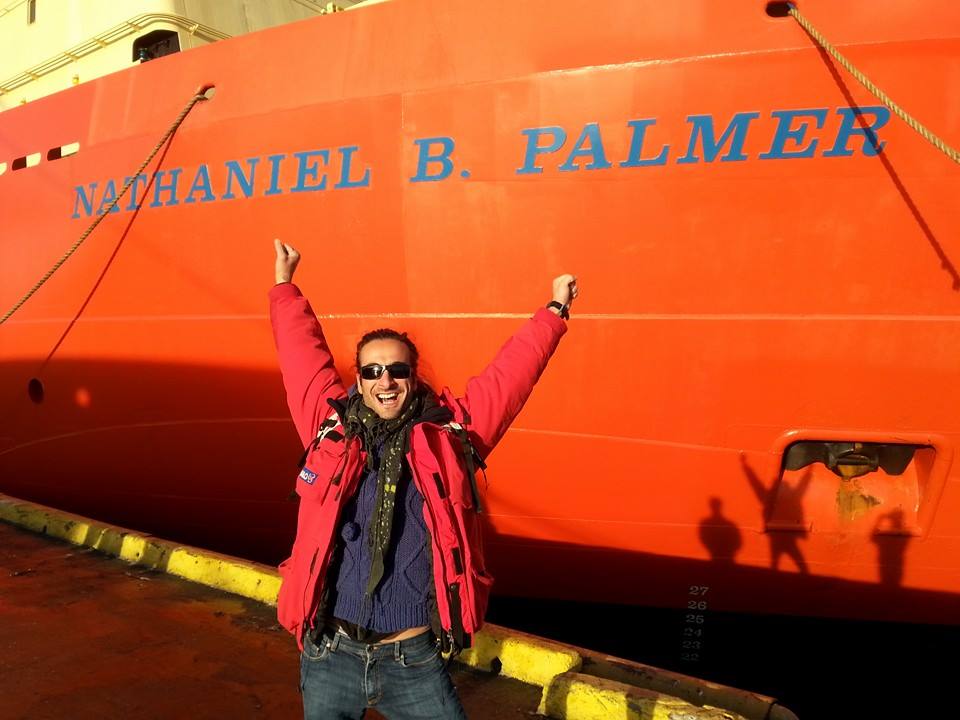
Starting from 2026, the PhD Program Steering Committee has decided to establish the Emilio Riginella Travel Grants, in memory of Emilio Riginella, to support travel expenses for students enrolled in The Open University – Stazione Zoologica Anton Dohrn (OU-SZN) PhD program to attend scientific conferences.
Emilio Riginella was a highly regarded researcher in fisheries biology at the Stazione Zoologica Anton Dohrn (SZN) since 2018.
During his career, he took part in seven Antarctic research expeditions, mainly aboard international icebreaker vessels such as the Polarstern (AWI, Germany), the Laura Bassi (Italy), and the Nathaniel B. Palmer (USA). He also carried out research activities at the Italian “Mario Zucchelli” Station.
Among his scientific contributions was the discovery of the new species Artedidraco longibarbatus (Eakin, Riginella & La Mesa, 2015), an Antarctic fish from the Weddell Sea.
Beyond his commitment to research, Emilio always nurtured a profound passion for the sea in all its forms: freediver, sailor, scuba diving instructor, fisherman, and photographer, he embodied a genuine and deep connection with the marine environment.


Project title: Technology TRAnSfer Office For MAnagement of Research Exploitation results
Acronym: TRASForMARE
CUP : B67G22000780006
Project duration: from 01/07/2023 to 30/06/2025
The TRASForMARE project – Technology TRAnSfer Office For MAnagement of Research Exploitation Results, funded under the PNRR framework, aims to strengthen the technology transfer activities of the Stazione Zoologica Anton Dohrn (SZN), with the objective of enhancing the valorisation of research results and facilitating their transfer to the productive sector.
The project is part of the development strategy of the Grant and Innovation Office (GIO), aiming to consolidate and expand the Institution’s industrial property portfolio, improve intellectual property protection processes, and intensify interactions with companies and stakeholders. This is pursued through the recruitment of specialised professionals (Knowledge Transfer Managers) and the implementation of structured scouting, promotion, and networking activities.
Main activities
- Scouting activities and support for patenting processes and patent portfolio management
- Promotion and valorisation of research results
- Awareness-raising actions on intellectual property protection
- Support to researchers in the disclosure of potentially protectable research results and/or advisory services for the development of entrepreneurial initiatives
- Participation in training events
- Organisation of meetings aimed at disseminating patent culture and enhancing research results
- Organisation of visits to local SMEs aimed at strengthening and enhancing collaborations between SZN and the business sector, as well as providing a free diagnostic and valorisation service for industrial property titles
The activities carried out have contributed to a progressive strengthening of internal competences and an increasing awareness within the Institution of technology transfer-related issues.


Copyright © 2015 by Stazione Zoologica Anton Dohrn Napoli - Italy
Villa Comunale, 80121 Napoli - Tel.+39 081 5833111 - C.F./P.IVA : IT 04894530635 - PEC: ufficio.protocollo(at)cert.szn.it